
6 February 2025
The sail from Biak to the Ninigo Islands looked, on paper, to be a perfect sail. The seasonal winds were predicted to be favourable with a current behind us of 0.6 knots. I was really looking forward to an easy trip of about six or seven days. The distance was just less than 500 miles. The reality turned out to be much different, an exhausting mammoth effort to reach the Ninigo Islands after sixteen days and over a thousand miles of sailing.
My first attempt to depart Biak was thwarted by a stuck anchor chain. The chain had become wrapped around some coral on the seabed and no amount of manoeuvring and soaking the chain would get it free. Fortunately, the Nirmala Resort was close by, I called a diver out to assist. It took some time for the diver to untangle everything on the seabed and once free I moved closer to shore and re-anchored. It was now late in the day and my enthusiasm for sailing had waned, I decided to stay another night and sail the following morning.
The departure from Biak was under motor in a flat calm. Hoping to pick up the wind once clear of the island I motored for a couple of hours. Finally, a light breeze filled in and we were sailing, albeit slowly, at last. Then, after an hour the wind was gone, we drifted for a few hours, we were clear of land and I was happy to drift and wait for the wind.
What followed was days of squalls, an easterly wind on the nose, calms and a strong current, up to 2.2 knots pushing us backwards. I was tacking into the easterly wind when possible and making very slow headway only to lose all the gains when the calms arrived and the current undid all out hard work. The squalls were persistent at night but at least we could make some forward progress in some of them. The current was relentless and I had to get out of it, I decided to try and get close inshore on the Papua coast to hopefully get out of the current and maybe pick up some land and sea breezes to aid progress.
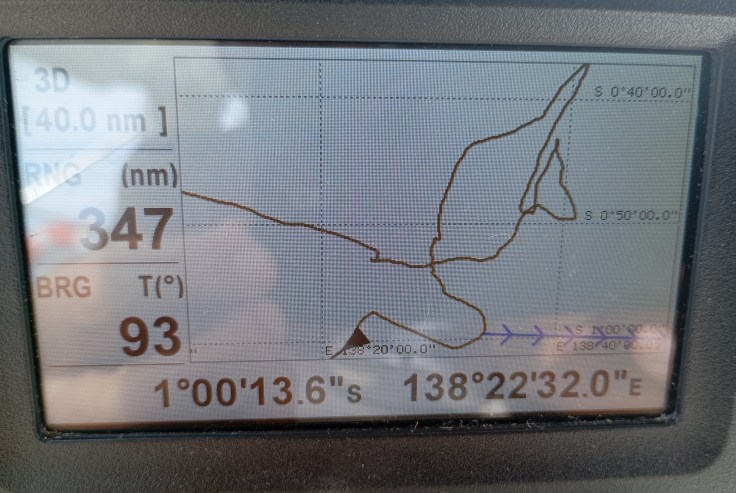
Slowly, over a few days we were able to close to within a couple of miles of the shore. Here the current was less and by playing the squalls and the onshore and offshore breeze progress was being made. Finally we were able to get a phone signal off Jayapura and a weather forecast on Windy. The current situation still looked bad offshore but it looked like there was sufficient of a wind angle on the easterly wind to make the Ninigo Islands on a close reach. Off we went, less than 250 miles to go. The sailing was still challenging with frequent squalls, usually less than thirty knots but lots of rain.
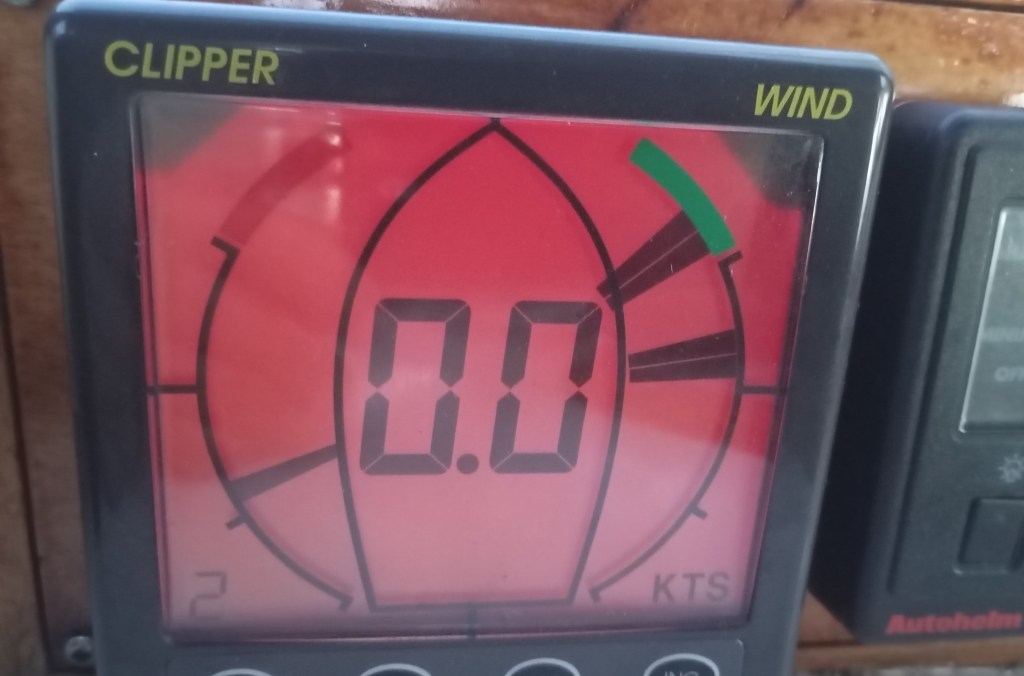
After three days we approached the North Pass on the Ninigo Islands and it looked like I could get through the pass and anchored with a couple of hours to spare before sunset. Well, the wind softened and then changed direction to the south, then another squall started to bear down on us. It was now touch and go if we could anchor inside the reef before sunset. Not wishing to push my luck I decided to play safe and wait for daylight in the morning before going through the reef pass. With triple reefed main and staysail we hove to for the night. The wind then changed to the south west and started pushing us towards the outer reef. I tacked, and still hove to, forereached away to the north and clear water. In the early morning more squalls came along and I was happy when the sun rose and we could head through the pass and find an anchorage.
Once through the pass I headed towards Longan Island where I planned to anchor. As I approached the Island a canoe came out to meet me. In the canoe was Oscar, the the head man, he waved me off the anchorage and directed me to a spot behind a reef where there was some shelter from the strong SW’ly wind. Finally at anchor, it wasn’t very peaceful with the strong wind but the anchor was holding well and I had a heap of chain out. It had been an exhausting trip and all within a couple of degrees of the equator. I sat in the cockpit and cracked an early morning beer, too tired to tidy the boat up, that could wait.
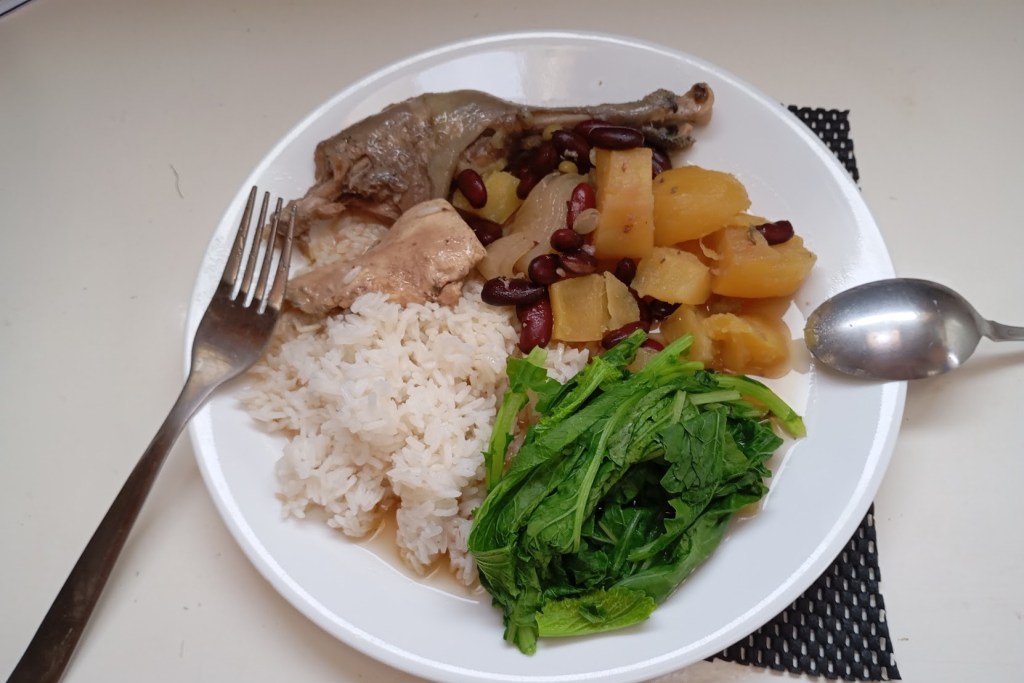
Later in the day I had a visit from Oscar who came across to say hello, he realised I was tired and said he would see me tomorrow. My next visitor was Stanly who brough me the best welcome present ever. He had killed a chicken for me and brought it along with sweet potatoes and vegetables, also a papaya for dessert. The Ninigo version of a KFC takeaway. After dropping it off he disappeared, promising to return the next day.

I flashed up the rice cooker. Next I made a coq au vin in the pressure cooker (minus the vin, I have no wine on board). The resulting meal was one of the best ever, a real feast, after which I slept for about ten hours.
The weather I experienced on thus trip was extreme. I have never encountered so many squalls, almost constant every day from late evening to early morning. The temperature difference in the squalls was also extreme, warm moist air and then chilly cold air from the rain. The power that can be generated in these squalls in a short space of time is tremendous. They were occurring so fast that you can almost see them growing. When I think how often we have been experiencing squalls since departing from the Philippines – is this the way its going to be with Global warming?

Discover more from The Adventures of Captain Ray Penson
Subscribe to get the latest posts sent to your email.
 The Adventures of Captain Ray Penson
Leave a comment