25 September 2024
The engine on Truce is a Yanmar 3GM30F. A very common and popular engine on older small cruising boats. Although they are not very powerful they are renowned for their reliability, simplicity and ease of maintenance, there are no puzzling and delicate electronic bits to go wrong. The Yanmar spare parts are however notoriously expensive. Cheaper aftermarket parts can be found online at sites like amazon, Ali express, eBay etc. I am of the opinion that aftermarket parts are OK for non critical functions and spares but when sailing in areas remote from shore back up support, quality and reliability can’t be compromised.
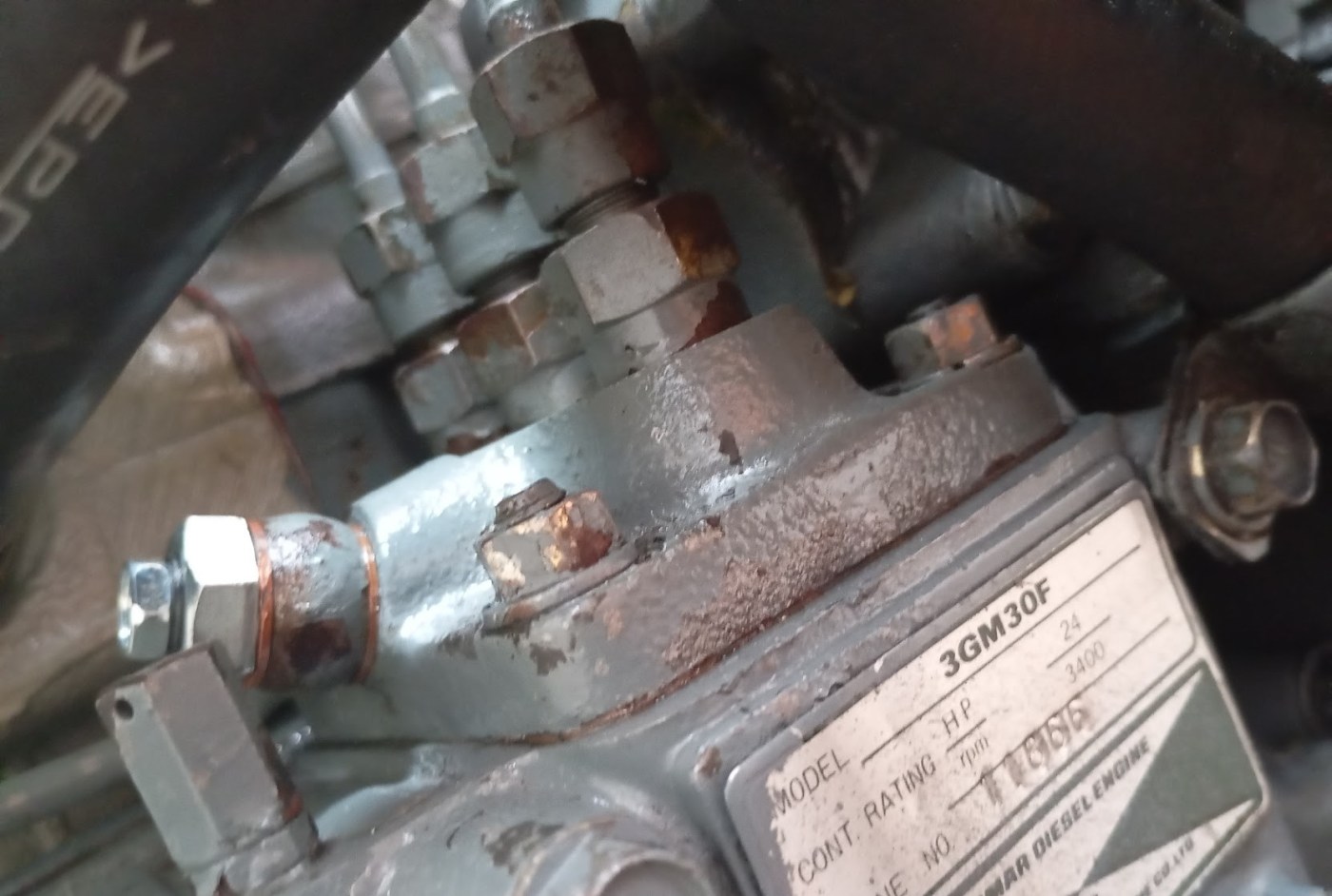
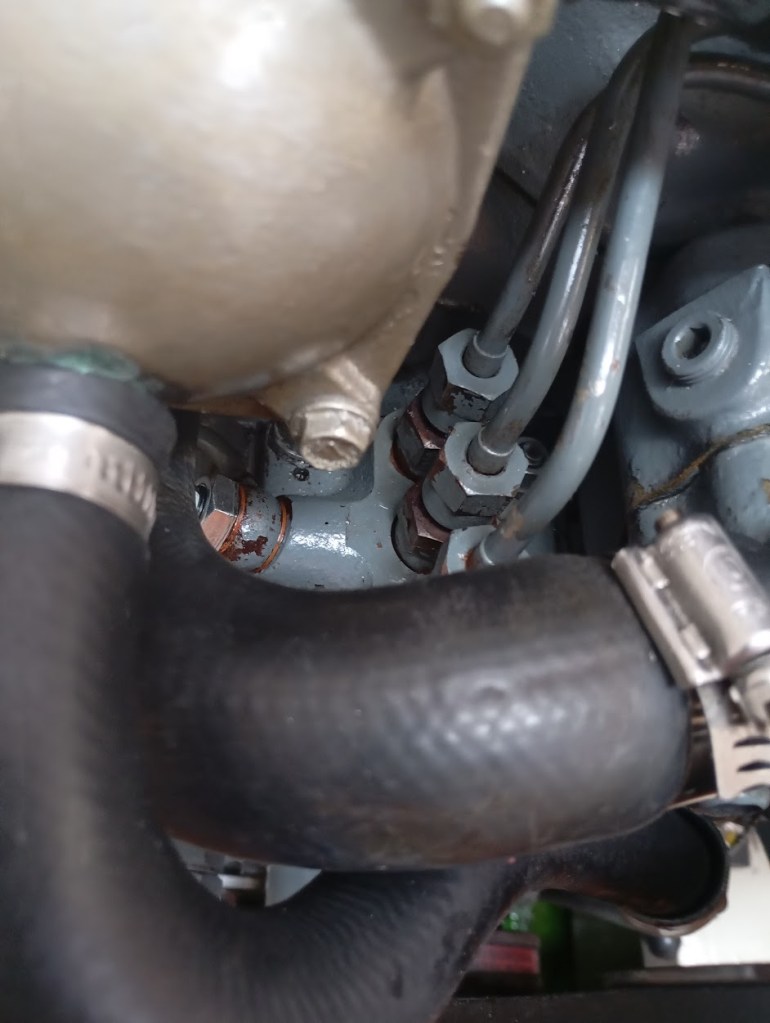
Over the last few months I have been noticing a slight trace of diesel around the top of the injector pump where the fuel lines come out and up to the injectors. The trace has only been slight and not enough to grab my attention as the engine was running fine. However, I had that nagging feeling that something was not right. Engine problems don’t heal themselves, they only get worse.
Over time I started to have some slight starting hesitation after the engine had been off for a while, it got me thinking. I concluded that the fuel in the injector lines from the injector pump top was dropping back by gravity due to the seepage I could see at the pump. So, when I started the engine the air in the lines had to clear first before a good high pressure flow of diesel could be established. My theory could be wrong but it seemed logical as this was a new problem and the leakage was not getting better. I know from experience that a pin hole and suction in the fuel lines can cause starting problems and be hard to trace and resolve.
It was time to take action. Now, injector pumps are scary and expensive things and I was reluctant to mess around with it. If something went wrong it would (undoubtedly) be costly and I was not confident I could find support locally in the Philippines.
After reference to the engine manual and the parts catalogue it became clear that each outlet pipe from the injector pump (Delivery valve) had an ‘O’ ring on the retainer, called the delivery ‘O’ ring. This is the link to the parts catalogue, https://j109.org/docs/Yanmar-3GM30-parts-catalog.pdf page 52 gives the details and parts numbers. This ‘O’ ring is specifically there to seal the delivery retainer and prevent leaks. I thought about the problem and solution for a few days and then went ahead and ordered three new Yanmar ‘O’ rings.

As I said above, the Yanmar original part ‘O’ rings are expensive. However, on such a critical part of the engine I didn’t want to take the chance of fitting non Yanmar parts. On inspection there does not seem to be anything special about the Yanmar ‘O’ rings and I am sure they could be substituted with similar sized good quality ‘O’ rings. Certainly, if coastal cruising I would not see a problem using aftermarket ‘O’ rings to save a few beer tokens.
The first plan of attack was to disconnect the coolant hoses to allow clear access to the top of the injector pump. When I disconnected the hoses I was surprised at how much coolant came out, it was all nice and clean. I used paper rags to catch and divert any residual drips from the disconnected pipes. Once I had good access to the top of the injector pump I cleaned everything multiple times with degreaser and copious amounts of fresh water. I wanted the area to be free of any debris and foreign bodies before removing the delivery valves. Dirt in the pump or delivery lines could be disastrous.
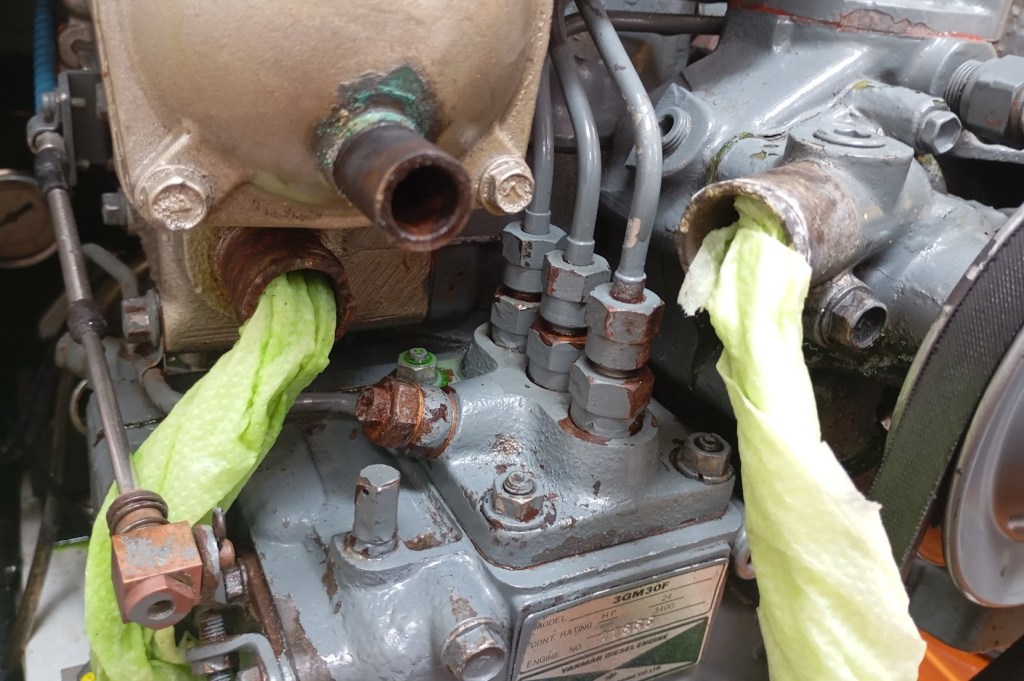
To remove the delivery valve retainer a couple of 17mm and 19mm wrenches are needed. First removing the outermost injector line and then the retainer. I was very cautious removing the first retainer, half expecting an explosion of small parts. In fact, I need not have worried, retainer came off easily and the spring beneath was not under any compression. Easy to remove and lay to one side, careful not to drop anything into the bilge.
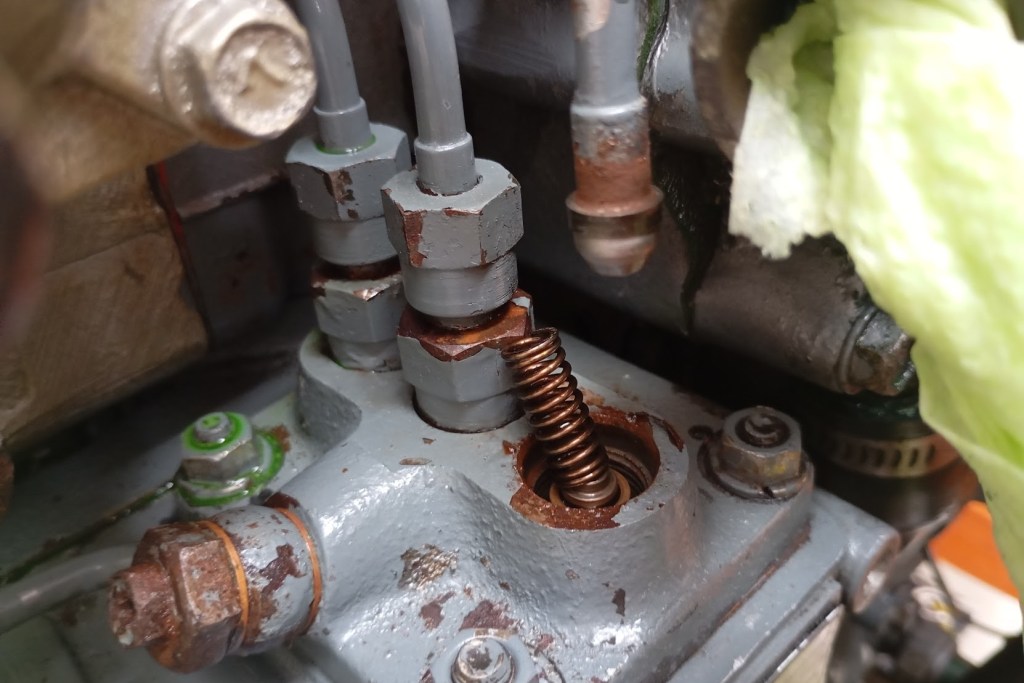
Working inwards towards the engine I disconnected the fuel lines and removed all the retainers. It was apparent that the existing ‘O’ rings were in very poor condition. The rubber was hard, brittle and two of the rings actually split as I removed them. I then cleaned the retainers and springs fastidiously before fitting the new ‘O’ rings, giving them a bit of lubrication before fitting everything back together again. I wasn’t sure how tight to fit the delivery valve retainer as I could not find any torque settings. As they were tight when they came out, I fitted them back tight again with a touch of mechanical sympathy.

Once everything was back up and connected, I topped up the coolant system with new coolant. After a double and triple check of everything it was time to start up the engine. I opened the compression levers and gave the engine a few turns on the starter motor to get the fuel back in the lines to the injectors. Then I reset the compression levers and turned over the engine. It started first time and ran as normal. A great relief.
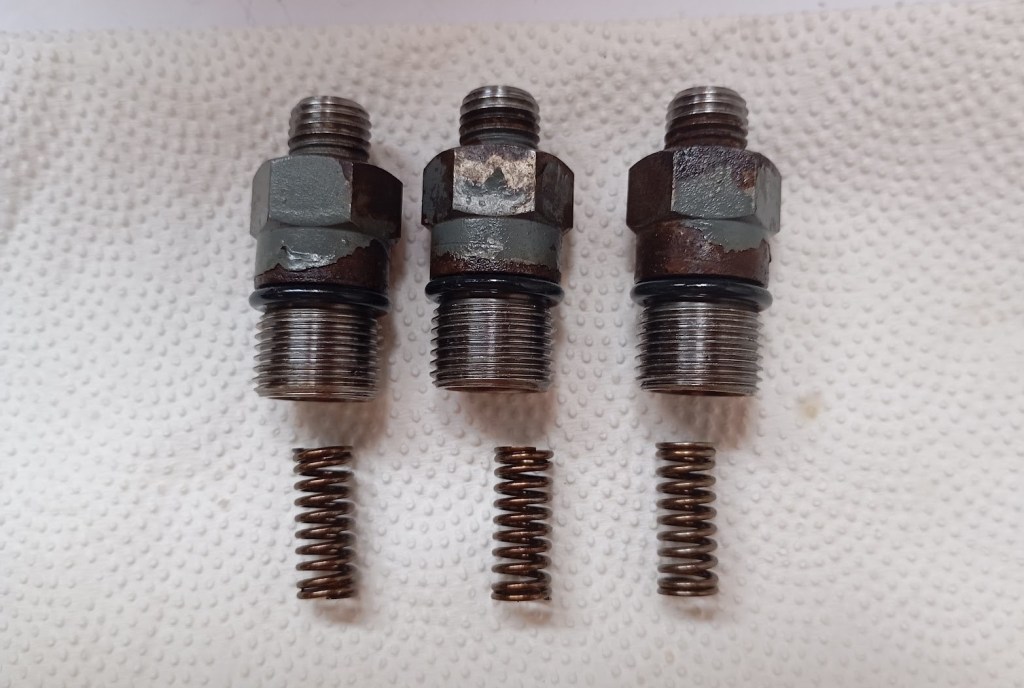
In hindsight, its not a difficult job and could be performed by any amateur mechanic. Its just the thought of messing with the injection pump that is scary. I am happy to report that the diesel leak is gone, the top of the injector pump is clean and dry. The engine now starts immediately as it did before the leak. Happy days.

Discover more from The Adventures of Captain Ray Penson
Subscribe to get the latest posts sent to your email.
 The Adventures of Captain Ray Penson
this is so interesting
LikeLike
Really good explained – job well done!
LikeLiked by 1 person