15 January 2024
Sailing northward up the east coast of Australia has always interested me, the idea of sailing up inside the Great Barrier Reef seemed an interesting thing to do. Also, being an admirer of the skills and genius of Captain Cook, I find following in his track interesting. I have reflected on the trip and will share some thoughts and observations with you.
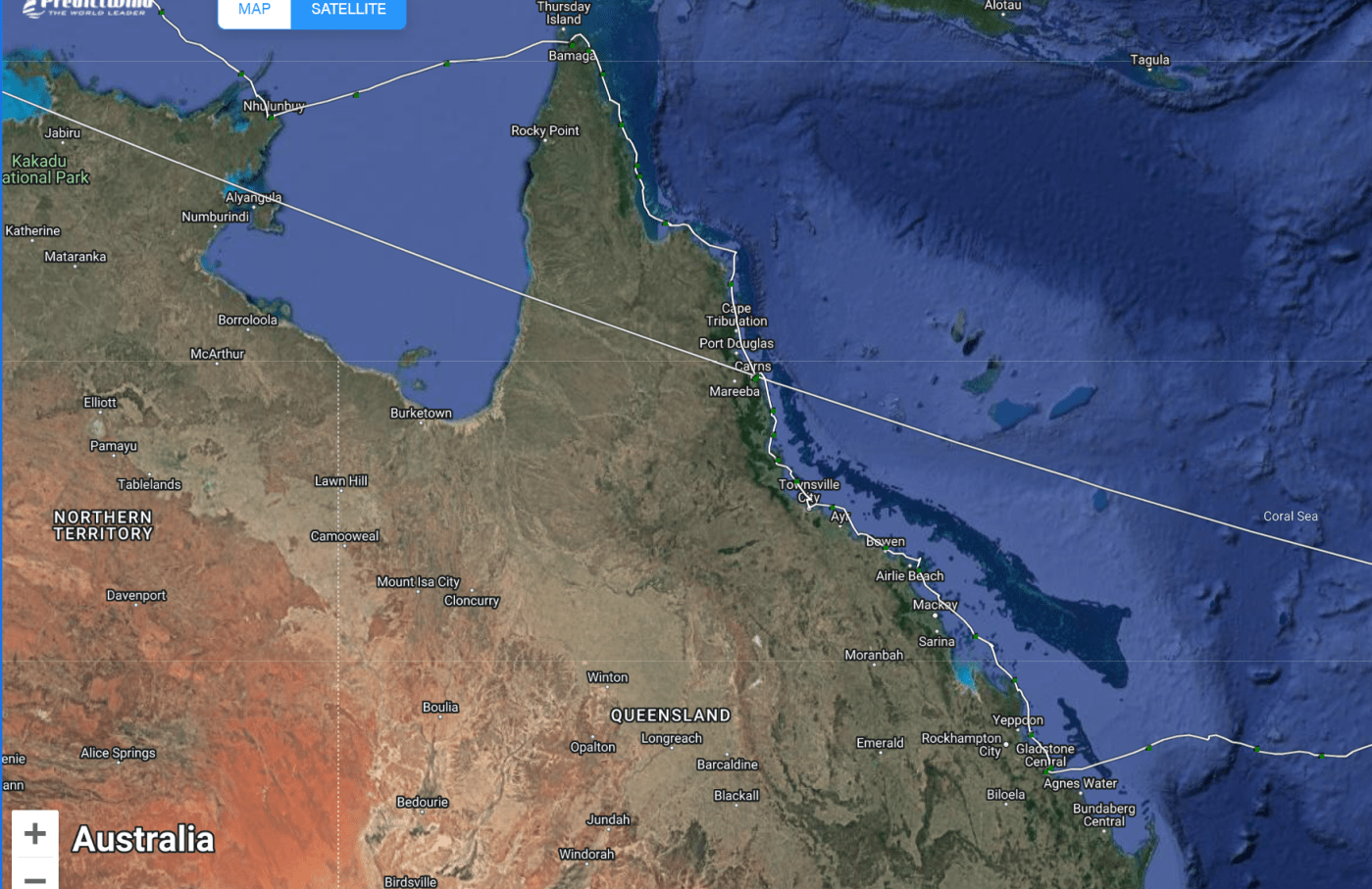
Of course, the reality of cruising an area or coast is often different from the perceptions. This was very true of my cruise inside the Barrier Reef. I started the voyage in Gladstone, Queensland and finished the Barrier Reef section In Siasea, just around Cape York in the Gulf of Carpentaria, amazingly still in Queensland – Australia is a big place. The distance I sailed from Gladstone to Seisia was around 1,100 miles, of course not always in a straight line, that’s just not allowed in sailing.

Since completing the trip I have spoken to other of single handed sailors who have completed the same route and found their experiences almost identical to mine. Most mentioned how much harder it had been than they expected. Without exception, every single-handed sailor I spoke to said they are glad they did it but would not do it again. Comments focused on three main points: –
- The relentless trade winds that were so wearying day and night
- The lack of protected anchorages to facilitate a proper rest
- The swell that persisted against all expectations and rolling at anchor
When going northward in the SE trade wind season (most of the year) the trades blow almost constantly and occasionally they blow strongly. When planning the route northward it is easy to underestimate the winds, despite the facts being clearly shown on the pilot charts. With such a solid and dependable wind sailing is fast and easy, often with just headsails set. In fact, due to an injured left arm I sailed all the way from Percy Island to Cape York with headsails only. It was easy sailing and some days we covered astonishing distances between anchorages.
In Gladstone I was given an old cruising guide by Alan Lucas. Although old and out of date the anchorages haven’t changed, it was full of good advice and assisted my trip north greatly. Anyone doing this route would be wise to invest in a copy of the Alan Lucas Cruising Guide.
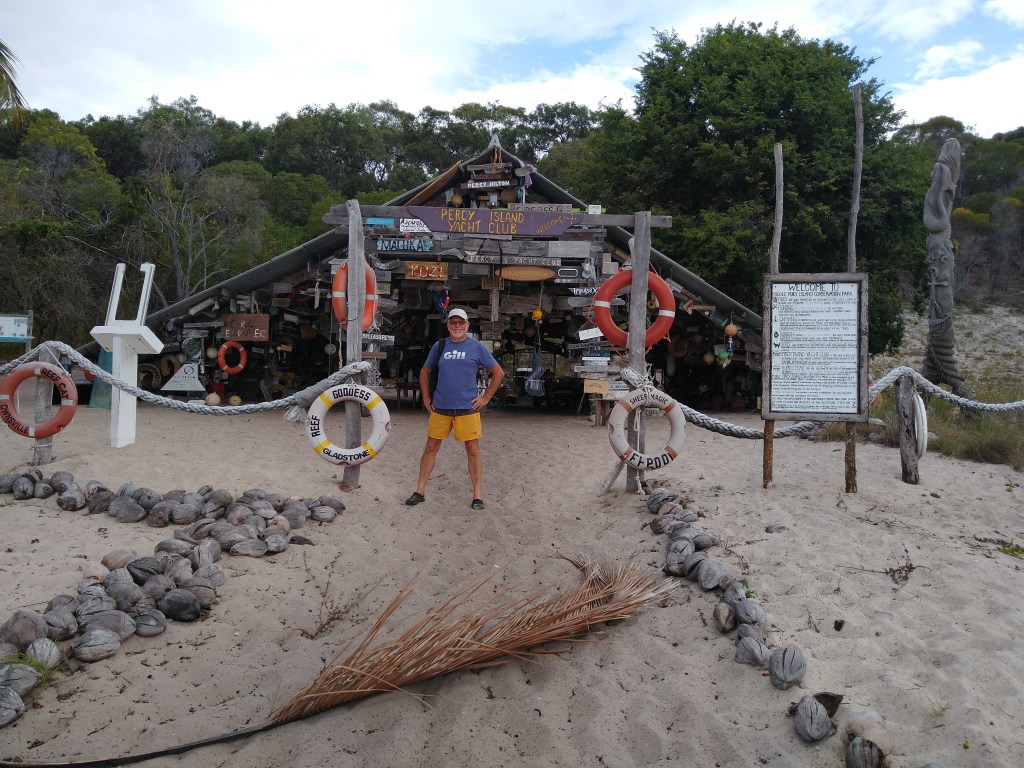
The coast from Gladstone to Cairns is well provided with islands and bays to anchor and there is no need to do anything but day sail between anchorages. Bearing in mind most anchorages are fair weather only, it pays to keep a good track on the weather forecast and plan to be somewhere more protected if a blow comes along.
When progressing North of cairns and Lizard Island most of the recreational sailors disappear. The Australian recreational sailors seem to get as far as Cairns and then wait for the trades to slack off before heading south again. After Lizard island I was surprised by how few boats were around. Between Lizard Island and Cape York the number of other sailing boats I saw could be counted on one hand, almost exclusively there were no other boats in the anchorages I visited. Its quite a lonely stretch of coast.
North of Lizard Island there are not any all weather anchorages for keel boats until Escape River is reached. Shallow draft vessels may have the option of entering shallow rivers and crossing bars to find shelter. However, such is the reliability of the SE trades most anchorages providing some protection from the SE will be satisfactory, although some rolling can be expected in many anchorages.

Also, north of Lizard Island civilisation takes a back seat. Marinas, reprovisioning and shore facilities are non-existent, for the next three hundred miles to Cape York there is nothing. Surprisingly the mobile phone signal also disappears for most of that distance. There is plenty of high ground ashore so it should not be that difficult to position a few cell towers and repeaters along the coast. If countries like New Zealand and Indonesia can do it why not Australia?

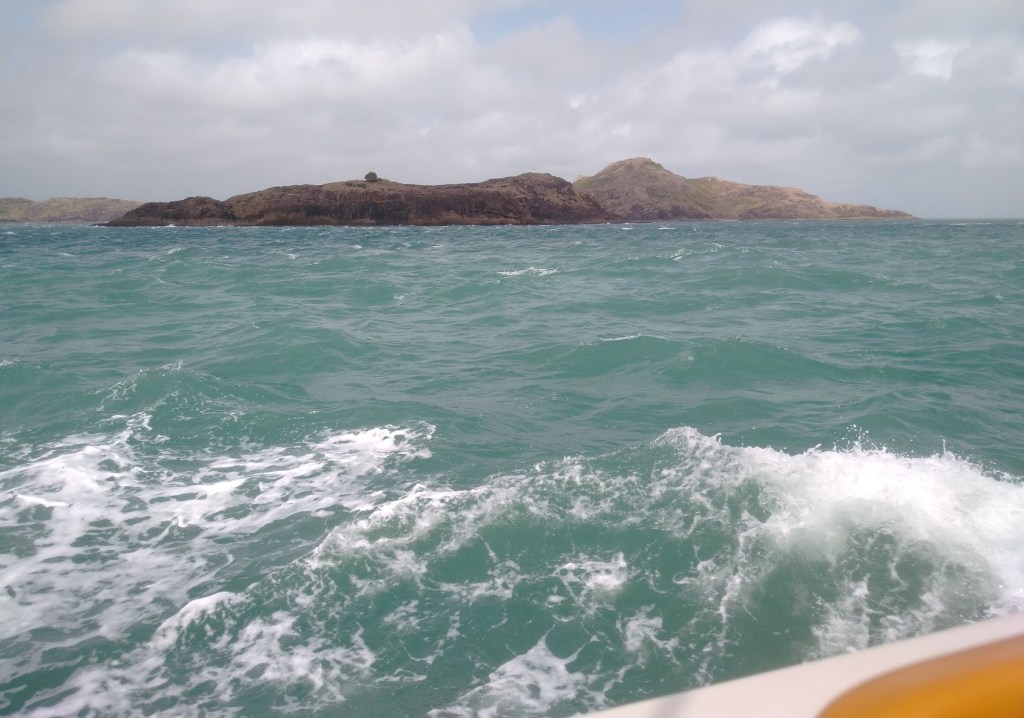
The swell is a surprising element that was not expected. I had assumed (and others I talked to) that inside the barrier reef there would be no swell. The fact is that the swell invades just about everywhere to some extent.
Another surprising thing is that you don’t see much of the barrier reef. Its almost like a desert. There are some sand cays dotted around, they may look inviting but in reality they are hot, sticky and often bug infested. If you are into diving and underwater stuff no doubt the reef is magical but for a sailor passing by there is nothing to see. This was a bit of a disappointment to me but what did I really expect to see? Not sure really, maybe I was too influenced by the ‘where the hell are you?’ adverts. The truth is that I am not a water person, I dislike getting into salt water and usually only venture in if it’s warm, shallow and involves cold beer. In Queensland its foolish to go swimming (my opinion) as there are countless creatures in there that will take any opportunity to sting, bite or devour a human.
I was most impressed with some of the large catamarans that the Australians use for cruising the coast. Obviously, a lot of thought had gone into the specification and design of these craft to make them the ideal platform for this particular coast. A whole heap of money is involved as well. The advantages being: –
- Large living area for outdoor living in a warm climate
- Protected cockpits with sun and mosquito screens
- Great all around visibility for watching the world go by.
- Shallow draft to maximise the options for anchoring in rivers and shallow spots
- Ability to take to the ground in shallow rivers and mooring to shore with stern or bow anchor.
- They can carry a large strong croc proof dinghy for exploring and longer trips inshore.
- Stable platforms in swell anchorages
- Good speed under engine for windless days
- Great trade wind (downwind) sailing with large easy to manage headsails.
During my passage up the coast I used the following anchorages. I have made a brief comment on each anchorage based upon my experience.
Turtle Island, Gladstone Good, moderate weather
Rat island, N. Channel Gladstone Fair Weather
Hummocky Island Fair Weather, OK in SE’ly
Kepple South, Long Beach Fair Weather, OK in N’ly
Kepple North Moderate Weather, OK in SE’ly
Pearl Bay Fair Weather, OK in SE’ly
Hexham island Fair Weather, OK in SE’ly
Middle Percy, West Fair Weather SE, Roll
Middle Percy, Rescue Bay Fair Weather, OK N’ly
Digby Island Fair Weather SE
Brampton Island Fair Fair Weather SE
Happy Bay Fair Weather SE
Nara Inlet Moderate Weather
Greys Bay Fair Weather SE, Roll
Cape Upstart Fair Weather, OK SE’ly
Townsville Duck Pond Shallow, Fair Weather
Magnetic Island Moderate weather, OK SE’ly
Great Palm island Fair Weather, OK SE’ly
Orpheus Island Fair Weather, OK SE’ly
Hinchinbrook, haycock Is. Moderate Weather
Hinchinbrook, Sunday Creek All Weather
Hinchinbrook, Gayundah Creek All Weather
Dunk Island Fair Weather, OK SE’ly
Mourilyan Harbour All Weather
Cairns River Moderate weather
Low Island Fair Weather, OK SE’ly
Cape Bedford Fair Weather, OK SE’ly
Lizard island Fair Weather, OK SE’ly
Stokes Bay Fair Weather, OK SE’ly
Morris island Fair Weather Fair Weather, OK SE’ly
Night Island Fair Weather, OK SE’ly
Portland Roads Fair Weather, OK SE’ly
Schelburne Bay Fair Weather, OK SE’ly
Escape River All Weather
Seisia Moderate Weather

Sailing inside the Great barrier Reef single handed is not the easiest trip. Sailing with a crew would make it much easier.
Am I glad I did it, of course.
Would I do it again? Not on a monohull or single handed, unless you paid me.
Discover more from The Adventures of Captain Ray Penson
Subscribe to get the latest posts sent to your email.
 The Adventures of Captain Ray Penson
Leave a comment