
3 January 2024
Surprisingly, more than a year has passed since I installed Lead Carbon batteries on board Truce. I only realised this as when I opened the battery locker to check all was well inside and saw the date stickers on the batteries. Since switching to lead carbon batteries my inspection regime has slipped from twice a month to every couple of months. The new batteries are sealed and maintenance free, removing the need for electrolyte level checking, specific gravity checking, topping up cells with distilled water and cleaning. Life is simpler now the distilled water and hygrometer have been discarded. On a boat a simple life is good.
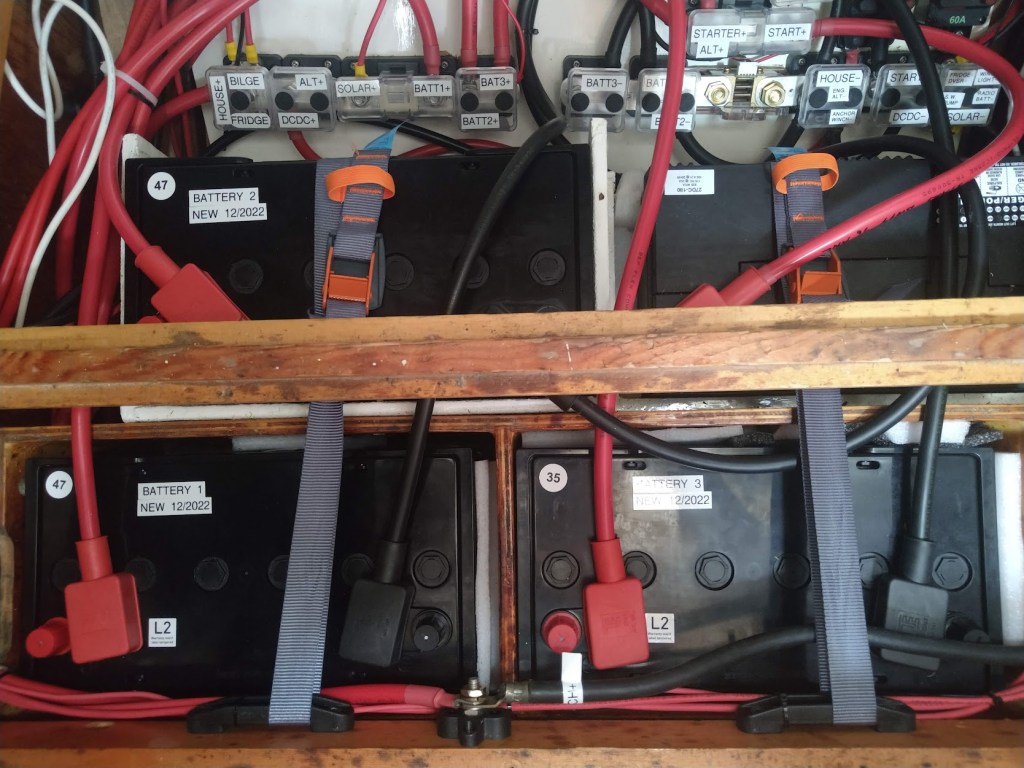
So, what has life been like with the Lead Carbon batteries? Well, the fact that a year has passed without any incident or concern shows that the new batteries are pretty much fit and forget. The batteries are under a constant load of some sort 24 hours a day. They receive a charge either from the solar panels or engine alternator.
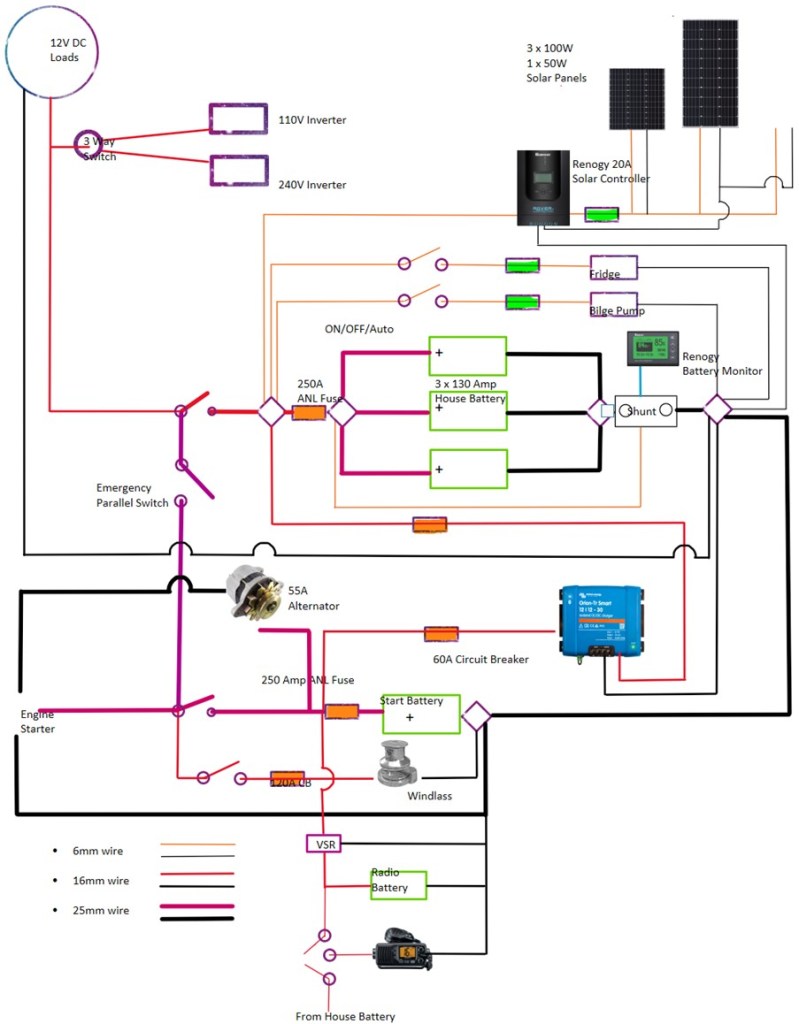
There are four solar panels on Truce, 3 x 100w and 1x 50 watt giving 350 watts total. These panels are fed through three Victron smart solar controllers to the batteries. I am pleased with the performance of the Victron solar controllers and particularly like being able to monitor performance, historical data and settings via Bluetooth. Victron is expensive equipment, but I cannot fault the real life performance. With Victron it seems you get what you pay for.
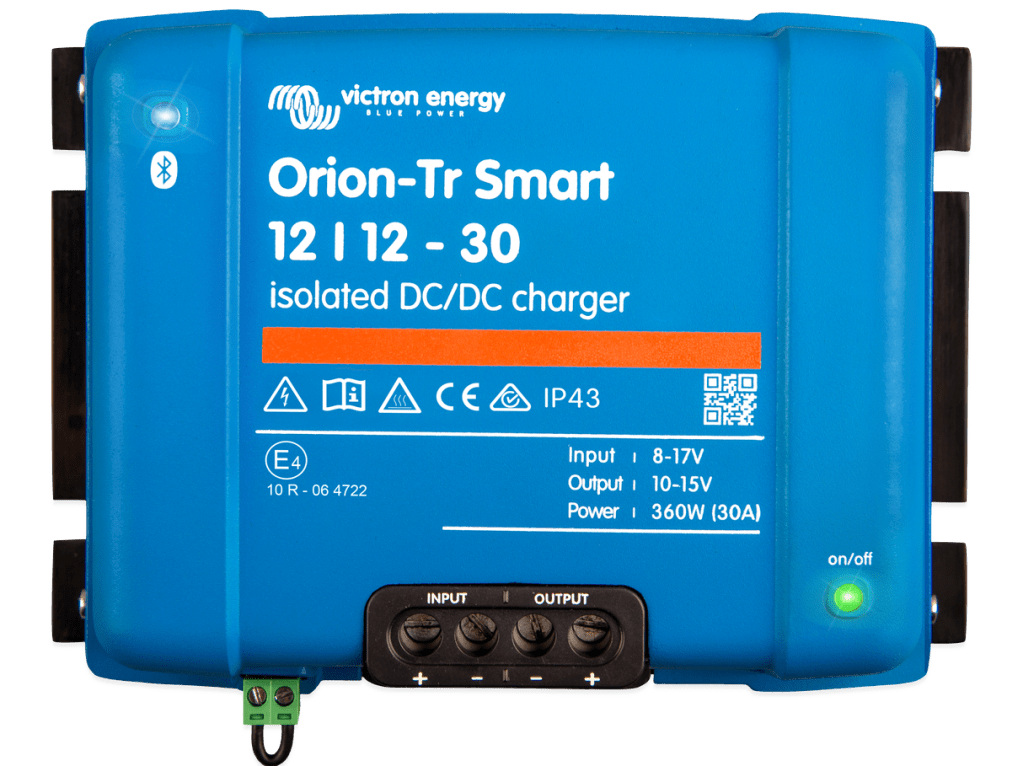
Alternator charge to the batteries is supplied via a standard 55 Amp alternator belted to the Yanmar 3GM30F engine. The alternator feeds to a Victron 12 volt, 30 amp DC/DC charger linked to the start battery and house battery. My thinking is that the 30 amp DC/DC charger will reduce the load on the alternator to a maximum of 30 amps, thereby reducing engine load and alternator belt wear. The DC/DC charger also serves as a smart battery charger, giving bulk, absorption and float charge. If the engine is running and we have high solar input the charging amps to the batteries could total just above 50 amps for a short period of time.
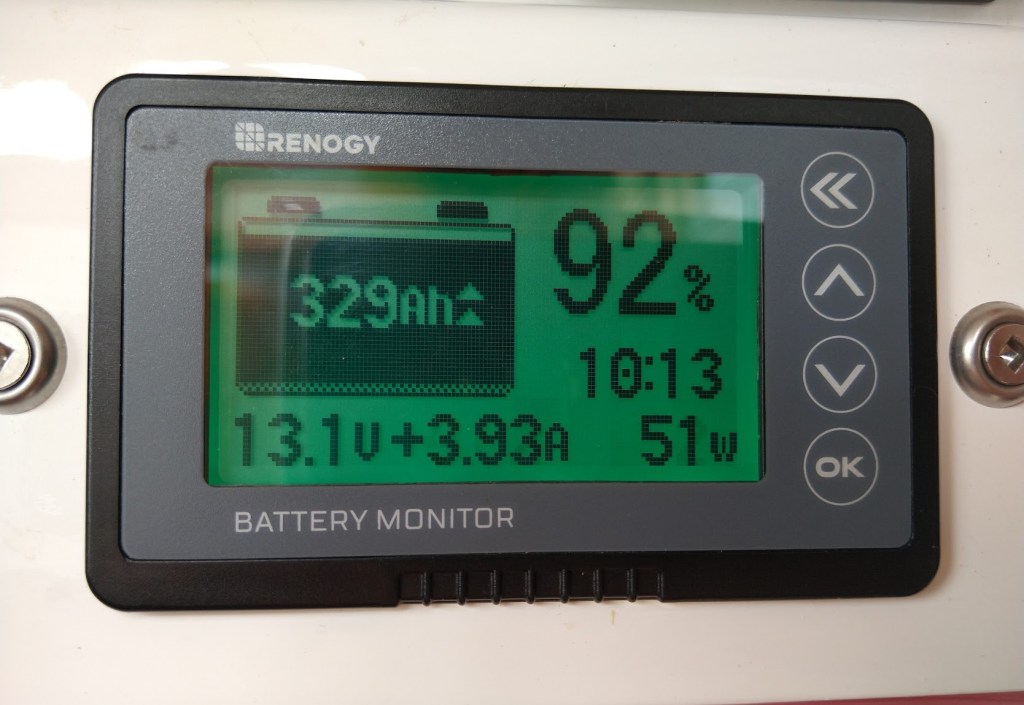
The battery status is monitored through a Renogy battery monitor which has proved to be reliable and accurate to date. I also have a Victron smart battery sense to provide the solar controllers the actual voltage at the batteries and battery temperature to ensure the correct charging regime. All of the Victron equipment is smart and talks to each other via Bluetooth.
Charging the lead carbon batteries appears to be faster that the previous lead acid batteries, particularly the last part of the charge cycle to achieve a float charge. I don’t have a way to measure this but it just seems faster.
Maximum current draw from the house batteries is very occasionally around 40 amps when the big consumers such as fridge, rice cooker and water maker are running. The batteries handle this load well, usually without the voltage dropping below 12.3v. Generally, the voltage may drop to 12.5 when loads are applied but will soon recover to 12.7+ when the load is removed. By contrast the previous lead acid batteries would have a significant voltage drop under load to 12.1v and take longer to recover.
Here in the tropics the batteries are operating at high ambient temperatures. The water sea water temperature has been above 30 degrees for months and with the engine running the temperature inside the battery box can occasionally reach 43 degrees. The lead carbon batteries have not shown any noticeable drop in performance due to high temperatures. I feel sure the old lead acid batteries would have required more frequent topping up with distilled water.
Is there a downside to Lead Carbon batteries? The only negative thing I have found in comparison to lead acid batteries is weight. The Lead Carbon batteries are considerably heavier. I have needed to redistribute some weight on the boat to compensate.
Another thought. Should I have changed to Lithium iron phosphate batteries? This is something I gave some consideration to before opting for lead carbon batteries. The high cost of lithium was a factor but overall didn’t factor into the decision as you get what you pay for. There were two distinct advantages for selecting Lithium Iron Phosphate batteries.
- Light weight.
- Deeper discharge ability. Meaning I could run for many days with poor solar input without resorting to engine charging.
On the flip side, I could slot in the new Lead Carbon batteries into the existing on-board electrical installation and space without any modifications whatsoever. To get the full benefit of Lithium Iron Phosphate batteries a high capacity charging alternator is needed and I was reluctant to change the engine alternator, belting and power take off.
Finally, it was another factor that led me to select lead carbon batteries. Truce is primarily a sailing yacht and often cruises to remote places away from any shore support. The cruising philosophy has always been to keep it simple and repairable without outside assistance. I know I can manage the existing electrical set up. However, I was not so confident of managing failures on Lithium BMS systems or the added complication of protection and shut down systems. But, if I was installing batteries on a new boat, Lithium would be the only way to go.
So overall, I am pleased with the lead carbon battery installation, it has become one less thing to worry about. There are many articles and videos online about lead carbon batteries including all the usual well informed and not so well-informed opinions. But, hopefully, if the manufacturers datasheets are correct about the lifetime and charge cycles of Lead Carbon batteries, I may never have to buy another house battery – ever.

Discover more from The Adventures of Captain Ray Penson
Subscribe to get the latest posts sent to your email.
 The Adventures of Captain Ray Penson
Thank you for this. I have a somewhat beefed up but still DIY solar setup. I have one system that is AGM, the other LiFePO4. The AGM batteries are probably in their last third of life and so I was considering replacing the AGM with Lithium but that setup isn’t sheltered from cold and Lithium should not be charged below 32F without heat, and lead acid can still be charged at lower temperatures. Your commentary here is almost a year old, so how are the lead carbon cells holding up now?
LikeLike
Hi, I can’t respond in full as I am busy now and may lose signal. Briefly my 3 LC batteries failed at the same time. Going from great to useless in a week. I am bringing one back to NZ for the dealer to investigate. LC batteries may need far more ventilation than LA type. If you email me I can give more info when I get to port.
LikeLike