
IS THE BASILAN STRAIT SAFE?
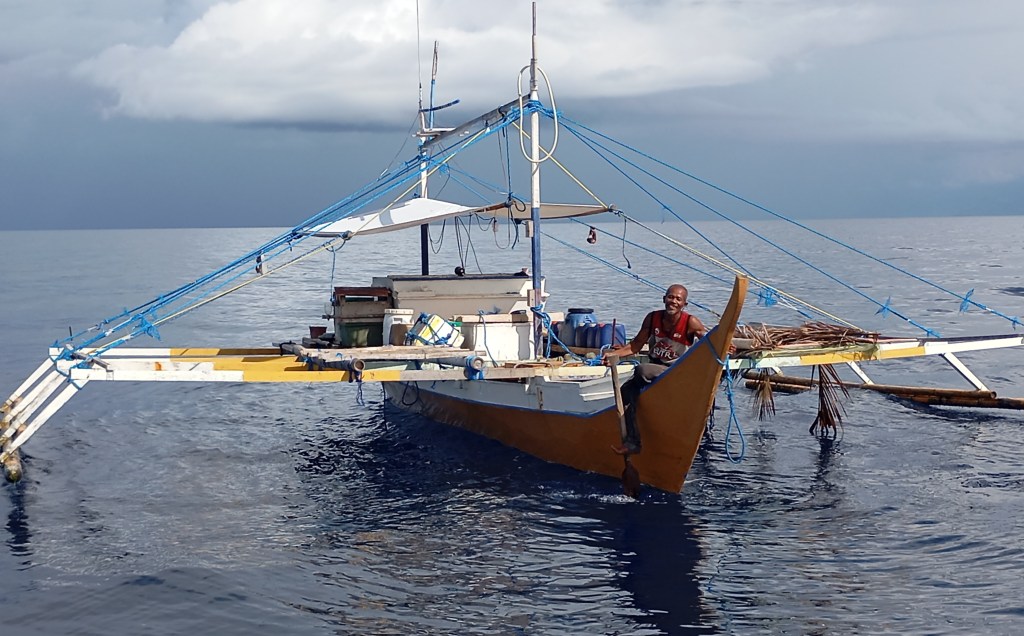
12 January 2025
The final days in Puerto Princesa involved fitting a new fuel pump on the engine and reprovisioning. After such a long delay waiting for spares to arrive Truce is finally ready to head out again.
My plans have changed, we have lost so much time, the winds have turned against us on our proposed route eastwards through the Philippines and down the east coast of Mindanao to Davao, where I had planned to check out of the Philippines before heading to Papua New Guinea. Going east through the Philippines now will be a big fight against the prevailing winds and currents.
The plan now (plan B) is to sail via the Basilan Strait, past Zamboanga and into the Celebes sea, then down to Biak in Indonesia where I can do a final reprovision before heading to Papua New Guinea. This route will give us a far better wind angle and cut the corner saving us a hard slog and many miles.
Of course when I informed my cruising friends of my intentions they all threw up their hands in horror and reeled off numerous stories of piracy and kidnapping around southern Mindanao. Certainly there have been instances in the past of some nasty activity by Abu Sayyaf and other groups in the outer islands of Jolo etc. To get an up to date picture of the situation I visited the Coastguard and let them know of my plans. They said that things had quietened down considerably (some hard Government action I hear) and if passing through the strait and not stopping there should not be any problem. They also let me know about the coastguard stations and VHF monitoring.

With a bit more peace of mind I set off to do the clearance out of the Philippines, by visiting the Sanitation, Customs and immigration to get all the paperwork completed. Then we were off.
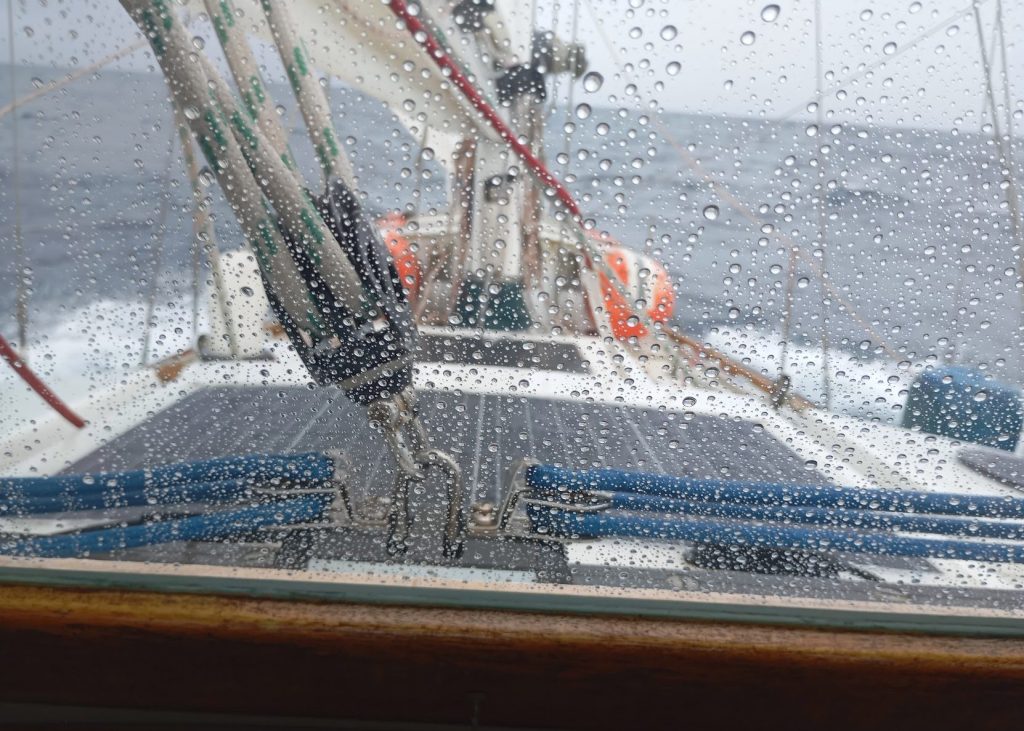
As we motored out of Puerto Princesa a good swell greeted us at the fairway buoy, quite bouncy as it met the outgoing tide, the interface marked with plenty of vegetation and logs from the river. Once clear of the fairway a good breeze showed up and we were on our way, sailing fast and free. The ride down across the Sulu Sea to the Basilan Straits was boisterous with a number of squalls coming through. At night I reefed down to the third reef so I didn’t have to go on deck in the dark, a good precaution as we didn’t lose much speed but the squalls were frequent through the night. Despite reduced sail we still did a couple of 100 mile plus days, lovely sailing.
Two and a half days out from Puerto Princesa and we were through the Basilan Strait and Zamboanga was behind us. The Coastguard called us up on VHF radio as we approached the Mindanao coast and monitored our progress. We entered the straits with a strong wind behind us, I had hopes of sailing through but as the sun went down so did the wind. We ended up motoring through at night with a favourable current pushing us. The strait has quite a bit of commercial traffic which made life interesting but thankfully very few fishermen around.
We were lucky with the tides in the Basilan Strait where the flow can exceed six knots according the chart. I could not find any tidal flow data for the straits online and the tidal charts seemed to be confusing and contradictory. I used the tidal stream information from the Windy App and this turned out to spot on correct. Well done Windy.
Once through the straits and into the Celebes Sea it became slow going. Not much wind, days of calms and stifling hot with no breeze. Many fishermen around and most came past to say hello, I don’t think they see many sail boats here. One fisherman came over for a chat, it was calm, so we tied the boats up and had a chat for 30 mins. He recommended a good anchorage where I could rest. I tried it, arriving and anchoring at sunset. The (Kaimba) anchorage turned out to be horrendous, just past midnight a southerly swell came in and we rolled awfully through the night. I was away at first light, happy to be away.
Further down the coast the wind picked up and we had some good sailing through yet more squalls and torrential downpours as we headed towards Sarangani Island.
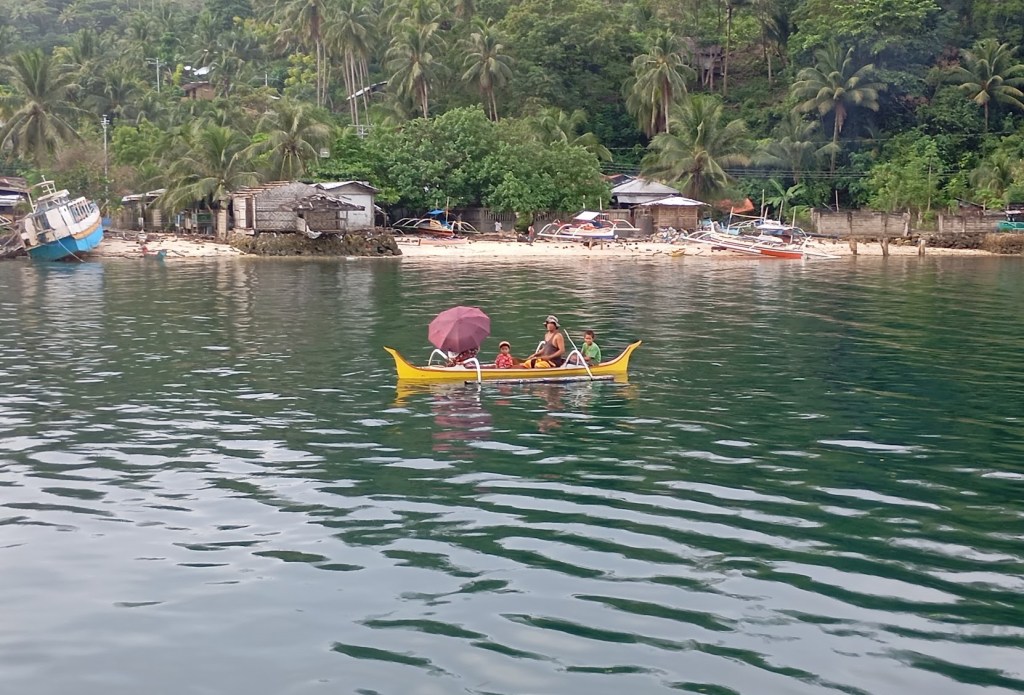
I stopped at Patuco Cove, I had identified a good secure anchorage inside a lagoon off the main channel at Patuco village, where I anticipated I could have a good rest. I entered the approach channel late afternoon and locals came running down to the shore to greet me. Lots of shouting and arm waving, they seemed very pleased to see me and I waved back. Then I realised they were also pointing at something and frantically gesturing at me to stop. Eventually I understood all the excitement as I saw a low hanging single electric cable crossing the entrance to the lagoon. I managed to stop Truce in time, turned around and anchored just off the village in the last of the daylight. It was quite a tight anchorage but good enough for a quiet night.
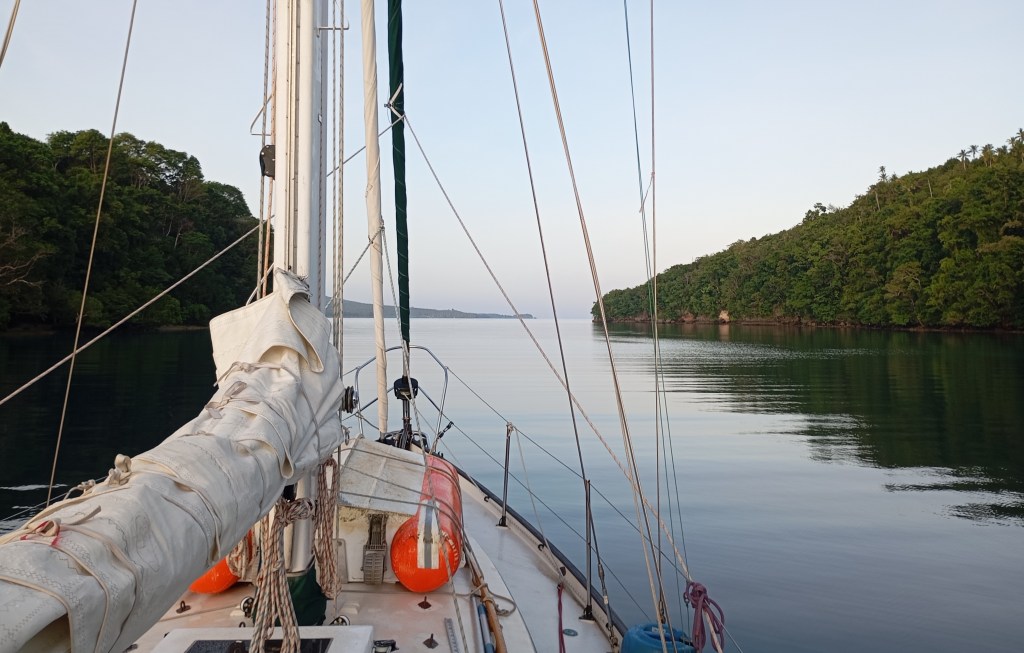
The next morning I moved on to Bolaye anchorage just a short distance down the coast. What a wonderful place, quiet, secure and protected with birdsong all around. Finally, I had a good anchorage where I could get a good nights sleep. I could have stayed a second night but decided to move along, this was my last Philippines anchorage, I had checked out of the country so didn’t want to linger too long. Soon after departing from the anchorage the wind died. It took a while to get clear of the islands, calm weather giving way to squalls and then calm again, a frustrating few hours.
The next stop was the island of Talud. This is an Indonesian Island, I wanted to stop here for a rest and get some Rp. from the ATM and a sim card for my phone. This is a lovely island and the people all very friendly and eager to help. So nice to be back in Indonesia, the people are so vibrant, helpful and enthusiastic. The Port officials and navy came to visit, no I had not cleared into Indonesia. I explained I just wanted to get some Rp. and a sim card for my phone to call my family. They were OK with this and happy after checking my papers. They even offered to take me to the market for supplies. I declined and not wishing to test their generosity was on my way shortly after.
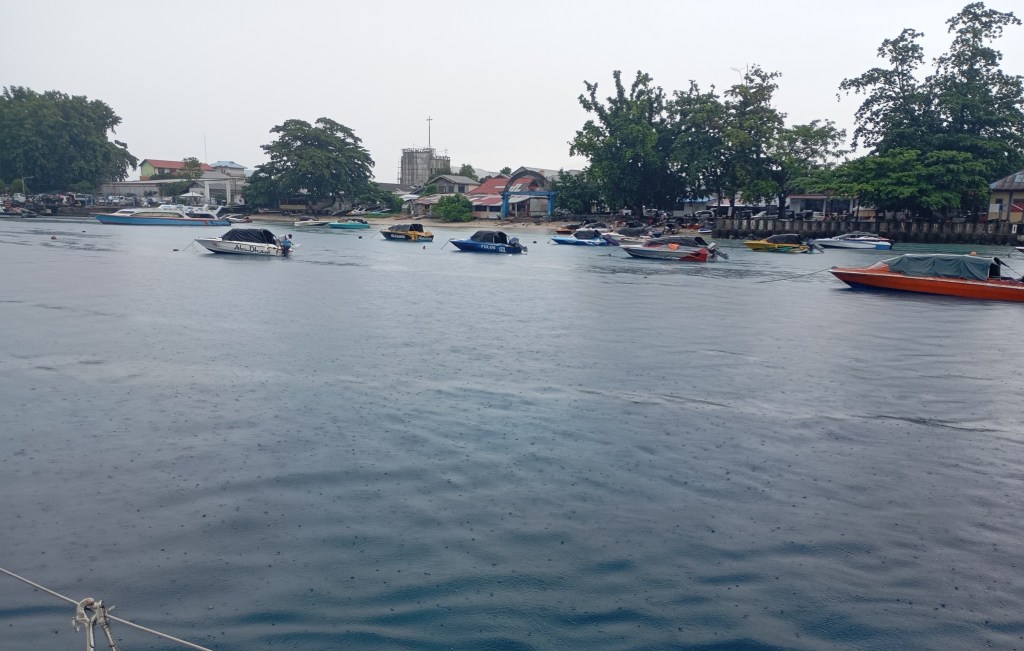
I planned my next top to be at Morotai Island. As I approached the island there was a horrendous looking large black squall approaching from the south. This was blocking my path and turned out to be a monster squall. I gave up trying to tack into it and freed off to run north of Morotai and keep going towards Biak.
The final run down to Biak was a slow affair. A lot of calms interspersed with even more squalls. There is no moon at the moment, the squalls are hard to see in the dark and sometimes were almost upon us before I realised they were there.
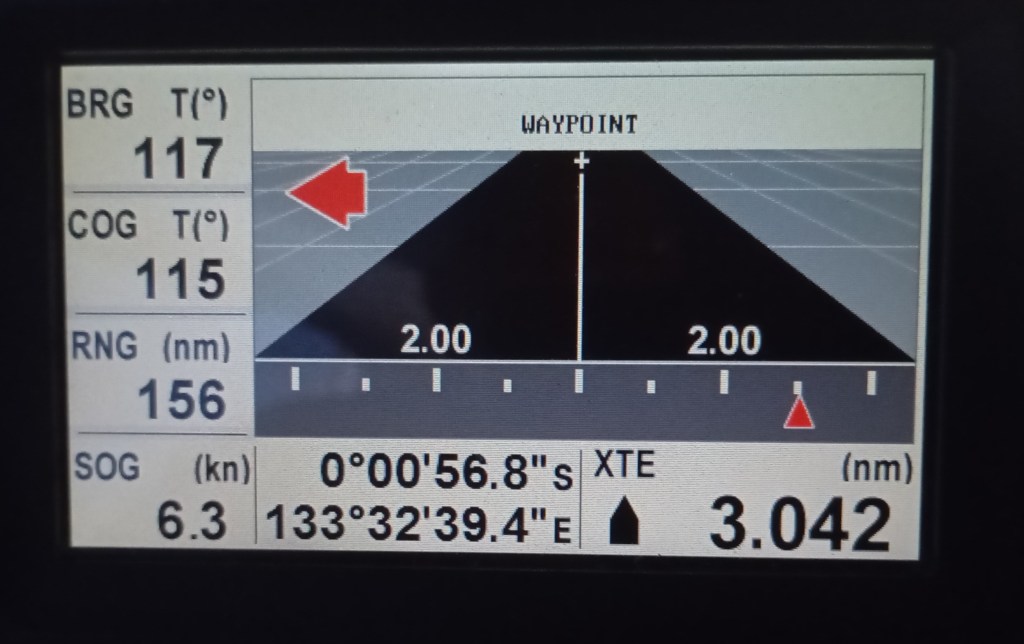
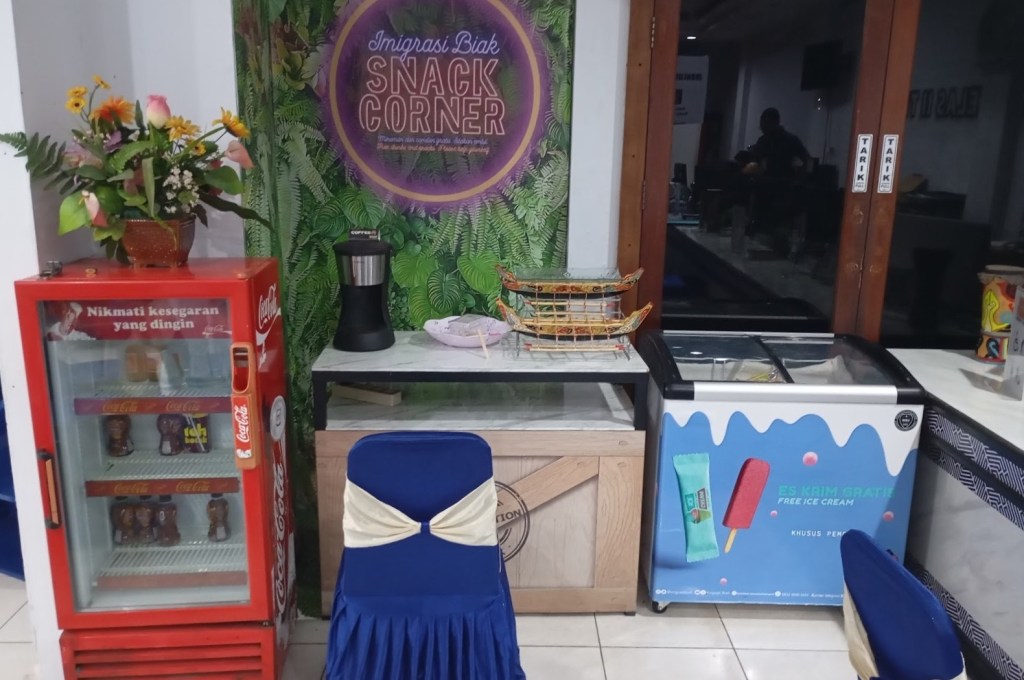
Finally, we Arrived at Biak on a Friday morning and anchored off the Nirmala resort. Ahmed at the resort was most helpful and arranged for me to clear in the same day did the check in the same day. The immigration office was the best i have seen in Indonesia, very welcoming and even had a refreshment corner for the clients.
After clearing in I visited the main supermarket in town and was really disappointed with the produce and limited selection on offer. My plan was to restock up here but it appears I have received poor information, the goods on offer are quite restricted and expensive. Well, I suppose Biak isn’t a big place and catering mainly too locals, I should have known better.
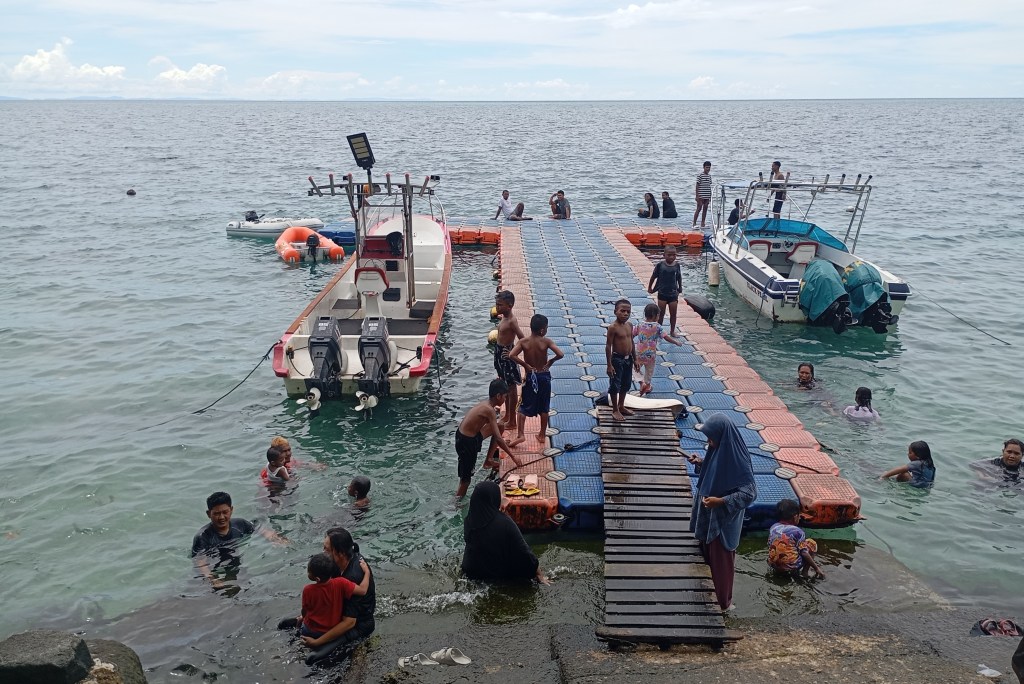
The anchorage at Biak is providing good sleeps.
BIAK AND MORE MAINTENANCE

19 January 2025
Once again, I have maintenance jobs mounting up. This light weather sailing with frequent squalls is taking its toll on the gear, sails and running rigging. Biak is a good place to do this, the anchorage for the most part is fairly calm and only transient squalls upset the equilibrium.
The priority jobs this time are to put chafe protection on vulnerable lines, replace the traveller turning bloc supports and fix damaged webbing on the mainsail slugs. The traveller blocks are the most challenging, but I am confident of getting some good quality mahogany timber here which will be stronger and more durable than the previous blocks.

Repairing the mainsail webbing was a straightforward task. Just time consuming installing new webbing and sewing it up. This is a bit old fashioned now as mainsail mast track has become much more sophisticated. But, simple is sometimes good and the repairs are cheap and easy and no need for expensive spare parts.

The preventer lines are becoming frayed where they rub against the standing rigging. This only occurs when the mainsail is fully out on the beam with the wind astern. I could reroute the preventer outside the stays but its too much of a hassle to keep moving the preventers around. The wear and chafing only really occurs in light winds when the boom is jiggling around as the sail fills and collapses.

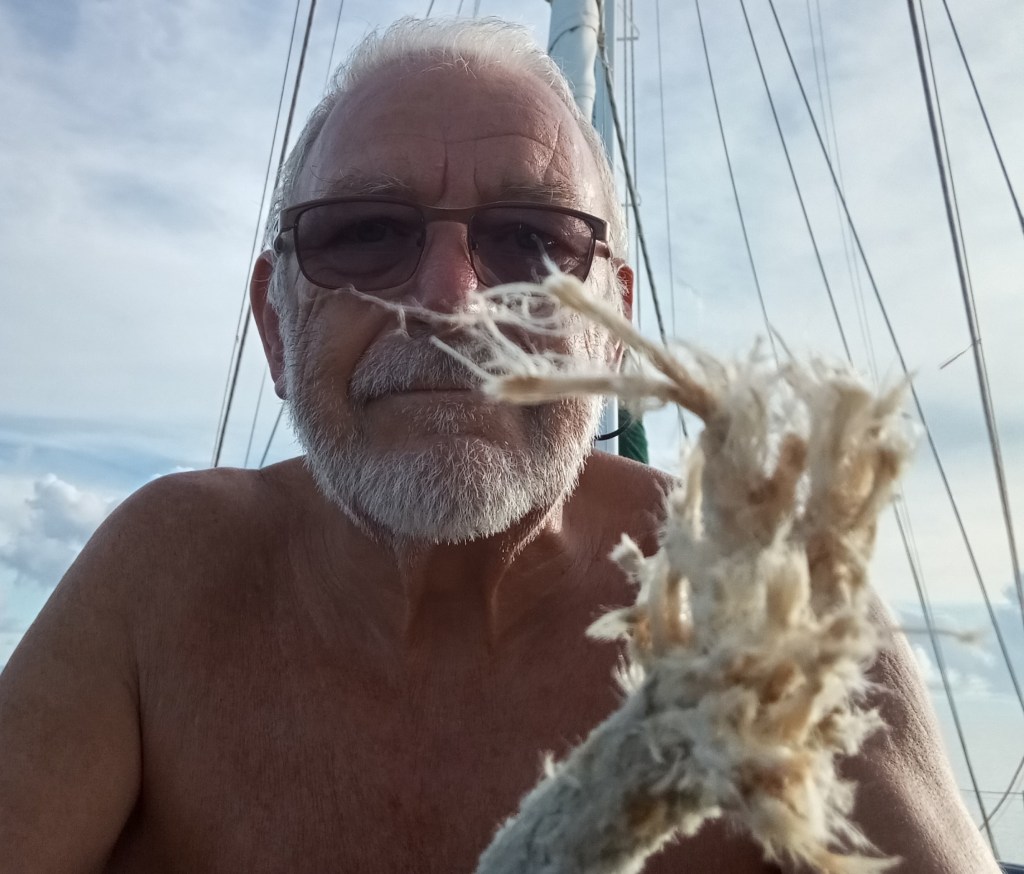
I wanted to put some rope cover on the preventers as a chafe preventer. Unfortunately, the old rope I have is well worn and hard, the covers just don’t fit over the preventer rope. I decided to use the core as a chafe protector. I didn’t know if this would work but its was the only thing I had to hand. When the job was finished I had even more doubts that it would work.
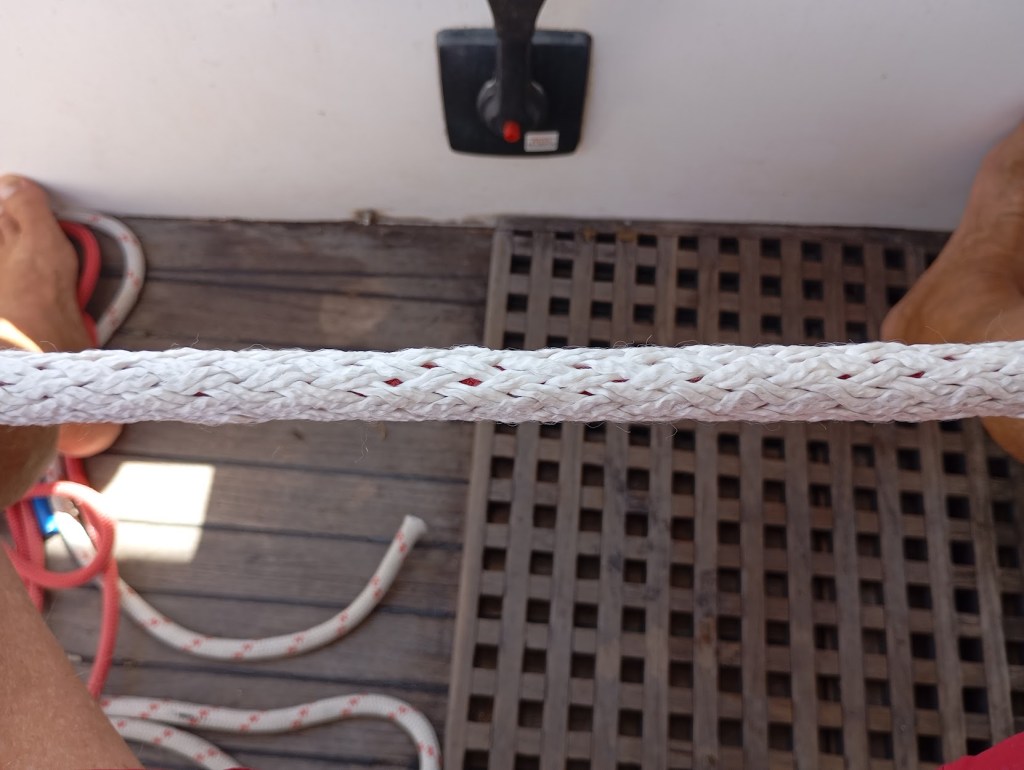
Surprisingly, it actually works quite well and is protecting the preventer rope from further damage. If I do this again, I will twist the core material to get a closer weave before sewing the ends.
The almost constant slamming and jiggling of the boom in light winds has revealed some weakness in the base for the traveller turning blocks. The timber is starting to split and that will only lead to water ingress and faster degradation. I have decided to replace them with hardwood blocks, I can get mahogany here which should be more durable and last many years to come. This is quite a big job as the mainsail will be out of action until the job is complete.

I removed the old blocks and after cleaning up the base I gave it a treatment of epoxy to harden everything up and make it watertight. After a few hours of cutting and shaping I had the new blocks ready to install. As I had only one chance to get this right I spent some time measuring and dry fitting to make sure everything fit well before committing to final assembly with thickened epoxy, bolts and screws.

The finished product looks a bit rough but will look fine once it is tidied up and painted. The main thing is that the blocks are sturdy, providing a long-term fix.

Every couple if days squalls come through the anchorage, most are not too bad, just some strong wind for a few minutes and a heap of rain. One particular squall was a bit bigger and longer than the rest and kicked up quite a nasty sea.

This squall resulted in a broken snubber. Its not often an anchor snubber breaks and when this one broke it was as if a cannon had just gone off. I was in the cabin at the time and it scared the daylights out of me until I realised what had happened. However, thinking about it the snubber had been in use for a few years and taken some punishment along the way. Maybe over time the ultraviolet light had weakened it. We now have a new snubber in place but unfortunately the snubber hook has gone to Davey Jones locker.
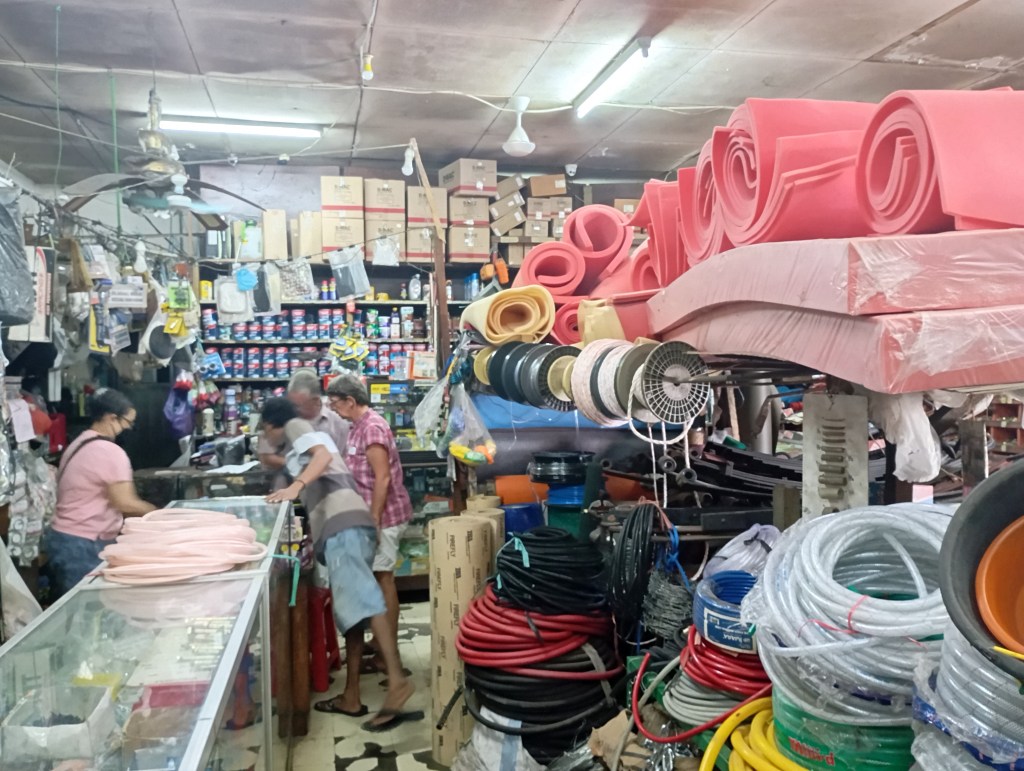
Ashore in Biak I came across a small store near the port selling all sorts of marine gear. Mostly aimed at the fishing and commercial boats in the area it nevertheless had a great range of goodies. There is a back room that the customers are not allowed into – but from there the shop assistant was able to produce all sorts of hard to source items. I love these kinds of stores.
There is a World War two museum in Biak centered on a cave system that was used by the Japanese in their fight against the mainly American forces. The cave system is said to be extensive with a few kilometres of tunnels. I was informed that the American troops rained down fire into the system and over three thousand Japanese troops perished. Scattered around the grounds are relics of jeeps, kamikaze planes, munitions, armaments and other war related stuff. Quite a sobering and thought-provoking place.
The time came to depart Biak, when I tried to weigh anchor I found the chain was fouled by something on the seabed. No matter how I pulled and finessed the chain I could not free it. After a couple of hours I gave up. I needed a diver. Fortunately, the Nirmala resort is close by and a diver soon came out to have a look. It took a while to free the chain which had become wedged under some coral. According to Ahmed the resort owner, this was the first time a chain had become fouled as I had anchored in the safe position provided by the resort. Just my luck! Anyway, I re-anchored and rested a while. My enthusiasm for sailing had now disappeared and I decided to sail the following morning.
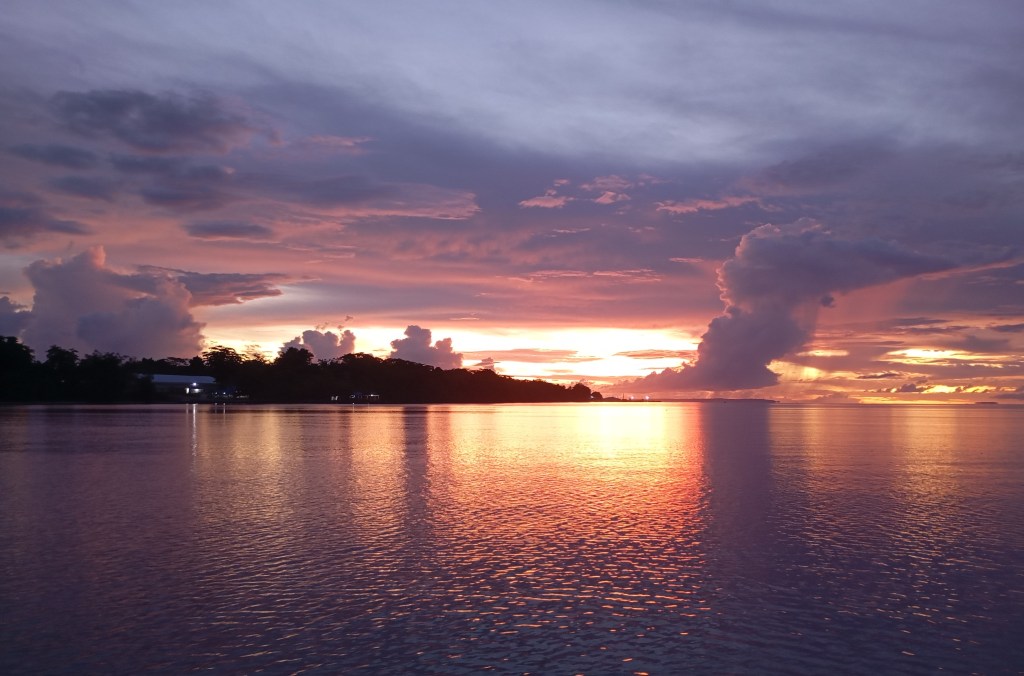
The next morning was flat calm and I motored out of Biak as the sun came up, a glorious sunrise and beautiful morning. I am looking forward to the next leg of the journey as I feel I have turned the corner, heading out into the pacific again and new adventures.
A VERY CHALLENGING SAIL
6 February 2025
The sail from Biak to the Ninigo Islands looked, on paper, to be a perfect sail. The seasonal winds were predicted to be favourable with a current behind us of 0.6 knots. I was really looking forward to an easy trip of about six or seven days. The distance was just less than 500 miles. The reality turned out to be much different, an exhausting mammoth effort to reach the Ninigo Islands after sixteen days and over a thousand miles of sailing.
My first attempt to depart Biak was thwarted by a stuck anchor chain. The chain had become wrapped around some coral on the seabed and no amount of manoeuvring and soaking the chain would get it free. Fortunately, the Nirmala Resort was close by, I called a diver out to assist. It took some time for the diver to untangle everything on the seabed and once free I moved closer to shore and re-anchored. It was now late in the day and my enthusiasm for sailing had waned, I decided to stay another night and sail the following morning.
The departure from Biak was under motor in a flat calm. Hoping to pick up the wind once clear of the island I motored for a couple of hours. Finally, a light breeze filled in and we were sailing, albeit slowly, at last. Then, after an hour the wind was gone, we drifted for a few hours, we were clear of land and I was happy to drift and wait for the wind.
What followed was days of squalls, an easterly wind on the nose, calms and a strong current, up to 2.2 knots pushing us backwards. I was tacking into the easterly wind when possible and making very slow headway only to lose all the gains when the calms arrived and the current undid all out hard work. The squalls were persistent at night but at least we could make some forward progress in some of them. The current was relentless and I had to get out of it, I decided to try and get close inshore on the Papua coast to hopefully get out of the current and maybe pick up some land and sea breezes to aid progress.
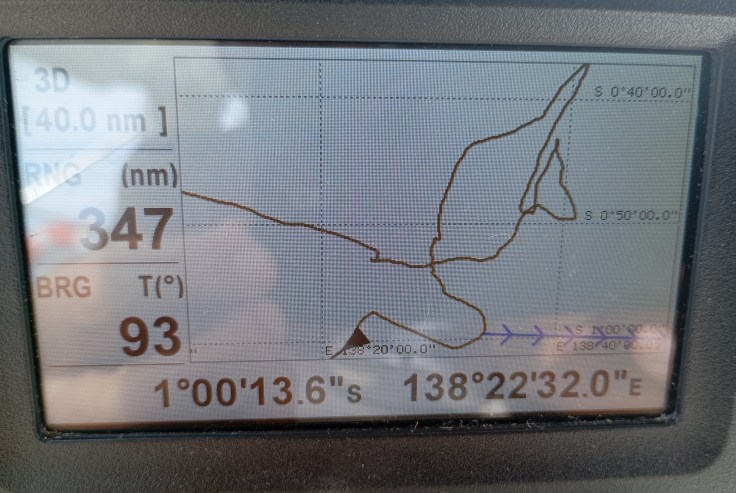
Slowly, over a few days we were able to close to within a couple of miles of the shore. Here the current was less and by playing the squalls and the onshore and offshore breeze progress was being made. Finally we were able to get a phone signal off Jayapura and a weather forecast on Windy. The current situation still looked bad offshore but it looked like there was sufficient of a wind angle on the easterly wind to make the Ninigo Islands on a close reach. Off we went, less than 250 miles to go. The sailing was still challenging with frequent squalls, usually less than thirty knots but lots of rain.
After three days we approached the North Pass on the Ninigo Islands and it looked like I could get through the pass and anchored with a couple of hours to spare before sunset. Well, the wind softened and then changed direction to the south, then another squall started to bear down on us. It was now touch and go if we could anchor inside the reef before sunset. Not wishing to push my luck I decided to play safe and wait for daylight in the morning before going through the reef pass. With triple reefed main and staysail we hove to for the night. The wind then changed to the south west and started pushing us towards the outer reef. I tacked, and still hove to, forereached away to the north and clear water. In the early morning more squalls came along and I was happy when the sun rose and we could head through the pass and find an anchorage.
Once through the pass I headed towards Longan Island where I planned to anchor. As I approached the Island a canoe came out to meet me. In the canoe was Oscar, the the head man, he waved me off the anchorage and directed me to a spot behind a reef where there was some shelter from the strong SW’ly wind. Finally at anchor, it wasn’t very peaceful with the strong wind but the anchor was holding well and I had a heap of chain out. It had been an exhausting trip and all within a couple of degrees of the equator. I sat in the cockpit and cracked an early morning beer, too tired to tidy the boat up, that could wait.
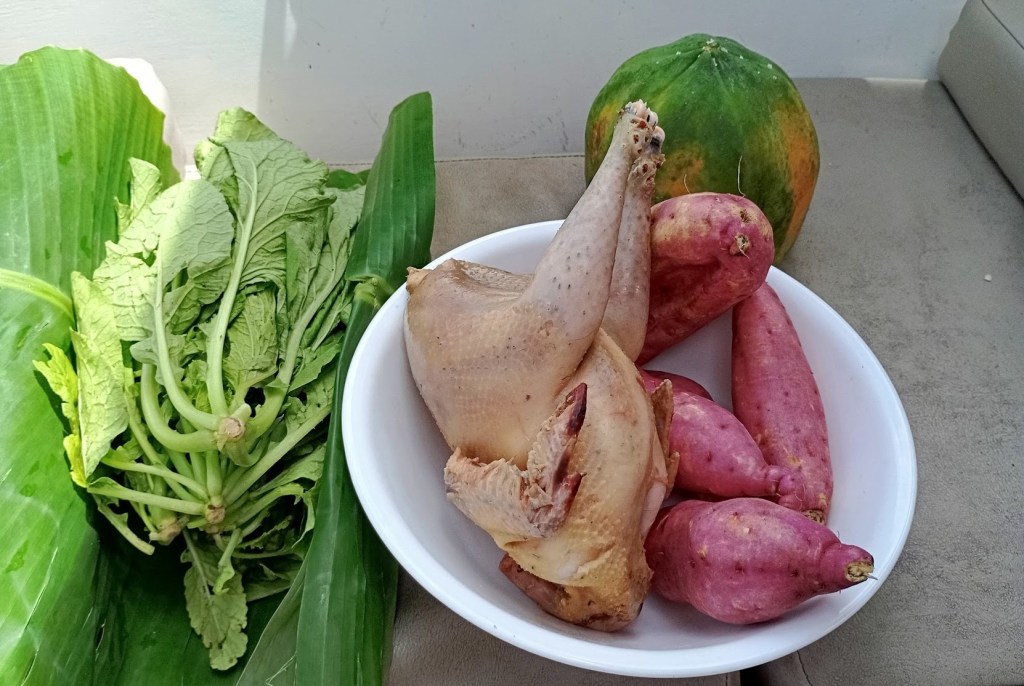
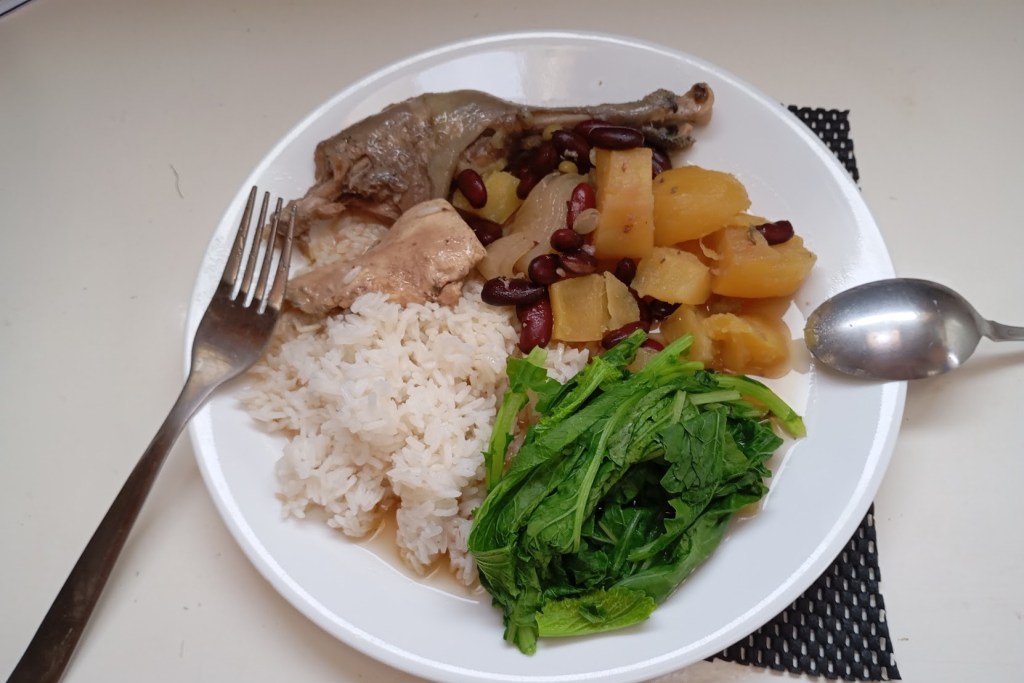
Later in the day I had a visit from Oscar who came across to say hello, he realised I was tired and said he would see me tomorrow. My next visitor was Stanly who brough me the best welcome present ever. He had killed a chicken for me and brought it along with sweet potatoes and vegetables, also a papaya for dessert. The Ninigo version of a KFC takeaway. After dropping it off he disappeared, promising to return the next day.
I flashed up the rice cooker. Next I made a coq au vin in the pressure cooker (minus the vin, I have no wine on board). The resulting meal was one of the best ever, a real feast, after which I slept for about ten hours.
The weather I experienced on thus trip was extreme. I have never encountered so many squalls, almost constant every day from late evening to early morning. The temperature difference in the squalls was also extreme, warm moist air and then chilly cold air from the rain. The power that can be generated in these squalls in a short space of time is tremendous. They were occurring so fast that you can almost see them growing. When I think how often we have been experiencing squalls since departing from the Philippines – is this the way its going to be with Global warming?
THE NINIGO ISLANDS ARE WONDERFUL
13 February 2025
The Ninigo Islands are a magical place, well worth the effort to get here. Unfortunately, the slow progress and time spent getting here has eaten away at the days I planned to stay here. This, coupled with the generally blustery and squally weather encountered during my stay has curtailed relaxing trips ashore. I am always concerned about leaving Truce unattended when the weather is unsettled.
But, it is fair to say that the Ninigo islands have been the highlight of my cruise so far. The people are hardy and self sufficient, at one with their environment, using the land and sea to provide their daily needs. Travel between the islands is carried out by sailing canoes which are skillfully handled and very fast. Supplies from Manaus appear to be infrequent with the supply vessel seeming to struggle to get past the Hermit islands to the east.
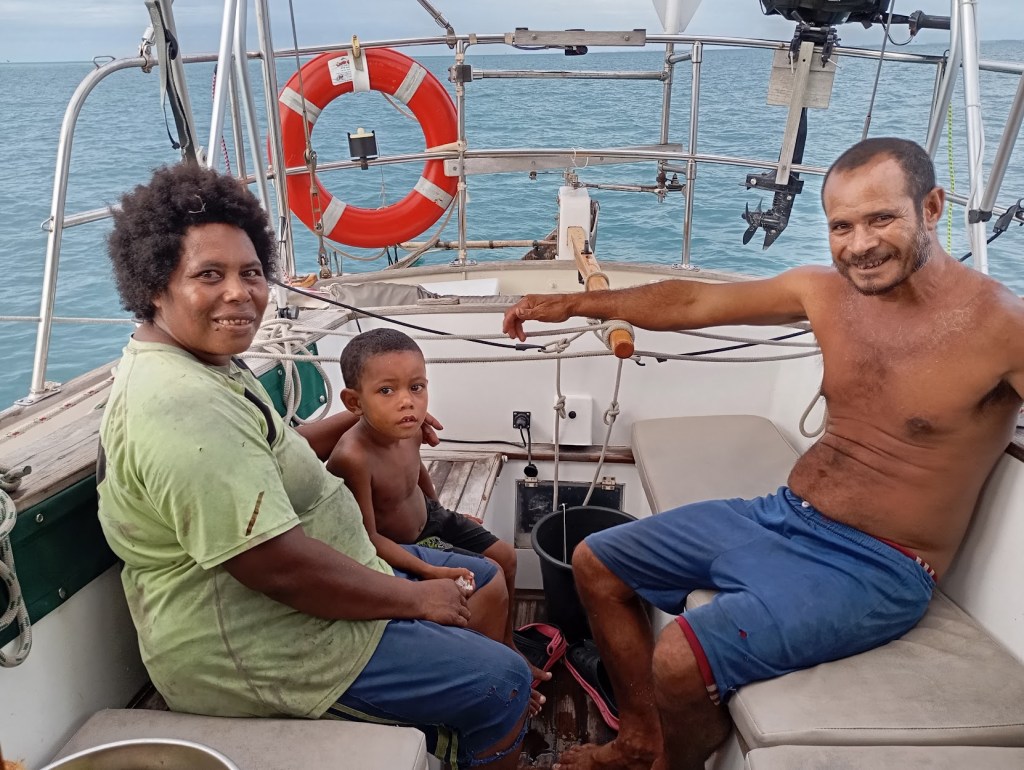
I would have liked to stay longer but the need to keep moving is unrelenting. The day of departure turned out to be flat calm and I ended up motoring for hours to clear the islands before a breeze set in and I was on my way to the Hermit Group of islands.

The overnight sail to the Hermits was beautiful, clear skies, millions of stars and a steady light breeze pushing us along nicely over calm seas. The next morning we entered the lagoon surrounding the Hermits and lost the wind in the lee of the islands. On went the motor and soon we were safely anchored. Then the weather turned nasty again with rain squalls and a nasty chop bouncing us around. The entry in the log book reads “A shitty windy and wet day”. That was it, no canoes came to visit, no fresh fruit to trade and no shore leave for the Truce crew.

The following day the horrid weather continued and I decided to clear out. I departed the Hermits without setting foot ashore or meeting any of the locals. I was happy to be on the way again. There is nothing more disheartening than sitting on board the boat at anchor unable to get ashore due to nasty weather, might as well be sailing and getting somewhere.
The first day out of the hermits we made slow but steady progress in light winds with the occasional squall passing through. The second day saw us back to battling easterly winds and an adverse current with frequent squalls again. In the afternoon a ship, the MV Paganella, passed close by. I called them on VHF radio and asked if they would send an email to Ngozi for me. It had been many days since our last contact and I just wanted to let her know I was OK. The Paganella sent the message and I am very grateful, thank you.
Another day of long tacking followed, this was becoming exhausting, fighting the wind and current with squalls and calms thrown in as further torture. In the evening I saw something I have never seen before, a rainbow by the light of the moon, its called a moonbow or a lunar Rainbow. The rainbow was first noticeable by the lighter arc in the sky. Then the colours of the rainbow could be made out, they were quite faint but definitely there. At night I have minimal light in the cockpit, instruments are either turned off if not in use or the illumination on minimum setting. Most of the time you don’t need the instruments and they just cause light pollution, you can see so much more if your night vision is not reduced by light pollution. I doubt I would have seen the moon rainbow if the instruments had been illuminated.
After two days I had sailed 150 miles in calms, squalls, and an adverse wind only to have made a few miles forward progress. I decided to head down towards the coast of Manaus Island and find an anchorage where at least I could not lose ground and get a rest. Luckily just after sunset as the light was quickly fading I found a sheltered anchorage behind a couple of islands.
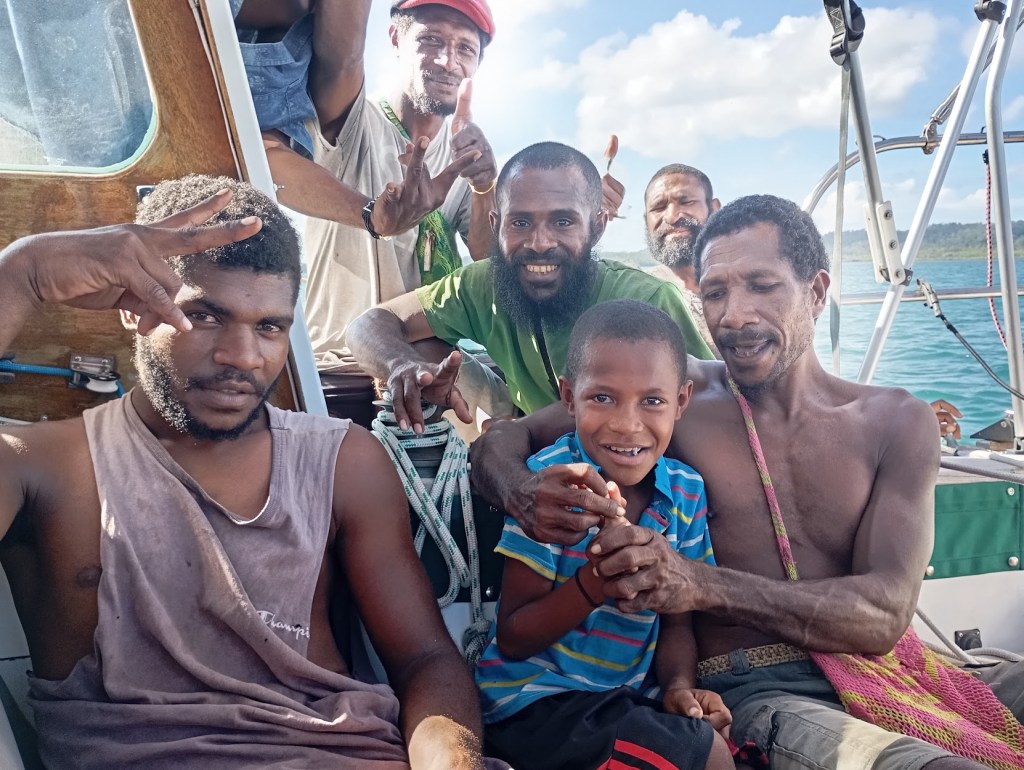
As soon as I had anchored I was surrounded by canoes full of excited and inquisitive locals. They had never seen a sailboat before and were very eager to find out what it was all about. It was now dark and with so many excited people around I thought the situation need to be calmed down a bit. I requested they understand that I was tired and needed a rest. That in the morning I would be happy to meet everybody and tell stories and also engage in some trade for fruit and vegetables. This was all agreed and the villagers returned home with the assurance that I would be safe and they would have somebody watching the boat from ashore.
The night was peaceful and I had a good rest. The following morning I hosted boatloads of locals and we set a few ground rules about visiting. The people were all very respectful, had a genuine interest and a thousand questions to be answered. The villagers live on the islands but their gardens were some distance away on the mainland, so the requested fruit and vegetables didn’t start arriving until the afternoon when we were able to barter goods to everyone’s satisfaction. The Manaus pineapples are the best I have ever tasted.
Another quiet evening followed and I had a good rest. Early the next morning I weighed anchor as the sun rose and departed. I had good relations with the villagers but didn’t want to push my luck as there is often one bad apple amongst the crop.
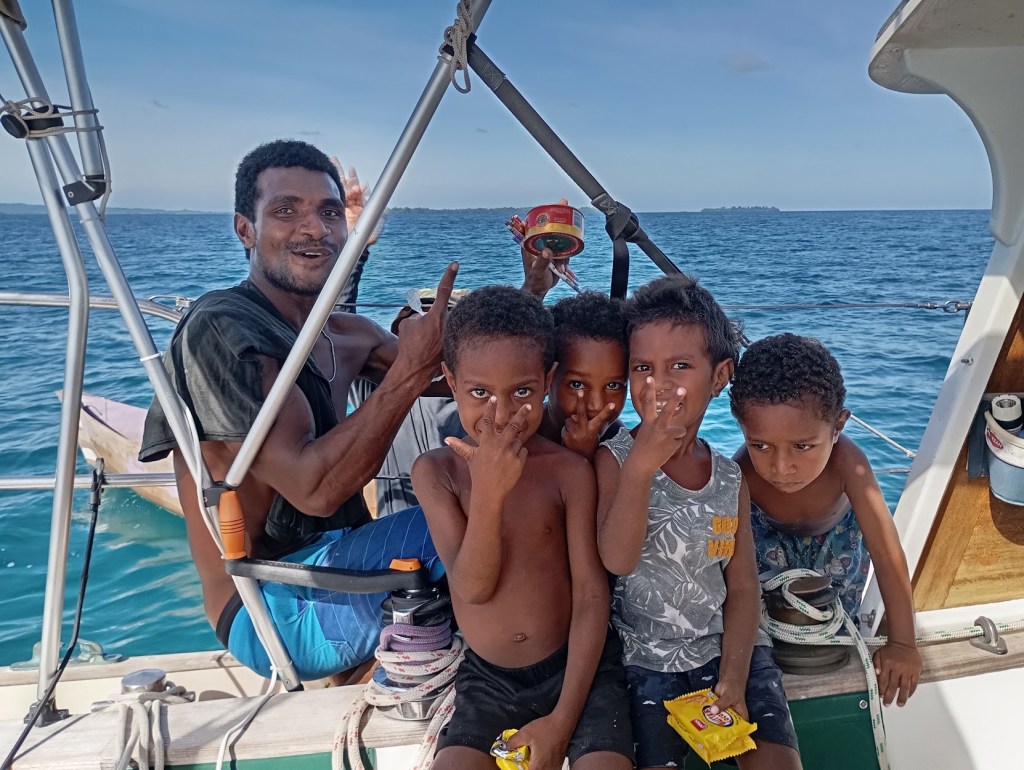
With a favourable breeze I was able to make a few miles along the north of Manaus Island before anchoring again at an almost uninhabited island. A local fisherman cane out with his children to have a look. They don’t see any sailing yachts around here and Truce was a novelty not to be missed.
My plan now is to head along the north coast of Manaus inside the Challenger Reef. It will be motoring but the water should be calm inside the reef.
SAILORS INVISIBLE TOOL SYNDROME (SITS)

20 February 2025
For many years I thought it was just me. It seems no one wanted to talk about it. However, once I broached the subject with a group of cruisers I realised that it’s a common affliction and not just an old age thing as I had assumed. Young and old appear to be susceptible to the syndrome in the same way.
When working on a boat, doing maintenance or repairs, it’s frequently necessary to get just about all the tools on board out of their resting places. Often this involves gaining access to little used storage locations on the boat after shifting large volumes of gear to gain access. Of course, storage space is at a premium on a boat and there are usually multiple layers of storage going on. In fact, on a cruising boat there will be a multitude of spare parts on board, both new and old including a vast number of miscellaneous items that may not be useful today but are classed in the “May come in handy’ in the future category.
On board Jobs often result in the boat being turned inside out. The result is displaced gear all over the boat and any flat work surfaces covered with spares, tools, glues, sealants, screws, clamps, tapes and often improvised devices to gain access to hard to reach places. Once a job is started it is usually necessary to fish out additional tools as unexpected problems arise and the dreaded mission creep sets in.

Once the work areas are fully cluttered and sufficient chaos has been established the conditions are ripe for the syndrome to kick in. One definition of a syndrome is a recognisable complex of symptoms and physical findings which indicate a specific condition for which a direct cause is not necessarily understood.
That long winded description fits the problem exactly. For example, when working with a tool (could be any tool), usually a vital tool and the only one that will fit a particular nut or fitting, it suddenly goes missing. A look around reveals nothing, you can’t find it. This leads to some head scratching and then a backtracking of movements to see if you have put the tool down somewhere else. Of course, this further search proves fruitless. Now the anger and frustration sets in and another search, moving all the other tools and parts around once again usually proves fruitless.
At this stage the experienced SITS sufferer will walk away from the problem and put the kettle on for a cup of tea, take a walk or any other activity that will distract from the problem. Only then can you return to the search, usually to find the tool or vital part sitting in full view on the work bench where you left it.
Of course it was there all the time, the gremlins and goblins haven’t been playing tricks. It’s something in our heads and minds that can’t see the blindingly obvious.
One guy told me that he put down a shaft anode he was fitting and then couldn’t find it. He went back to the chandlery and bought another one only to immediately find the original when he returned to the boat. Another guy said he went to the tool shop to buy a spanner as a replacement for the one he couldn’t find, only for the original spanner to show up as he was tiding up after the job.
As far as I know only men suffer from the syndrome. Somehow, I can’t see women being afflicted, their brains work differently.
WEEVILS CAUSE BROKEN TOOTH

25 February 2025
I love fresh bread and am ordinarily quite happy to bake it onboard when sailing. However, in the tropics the heat generated by the kneading and baking process is a massive deterrent. Body and boat just get too hot for comfort. Recently, I have been producing stove top bread that requires minimal kneading and just half an hour cooking on a low heat gas hob. While not as good as a nice fluffy loaf it’s a perfectly good alternative and will keep fresh for a couple of days and the boat doesn’t get too hot.
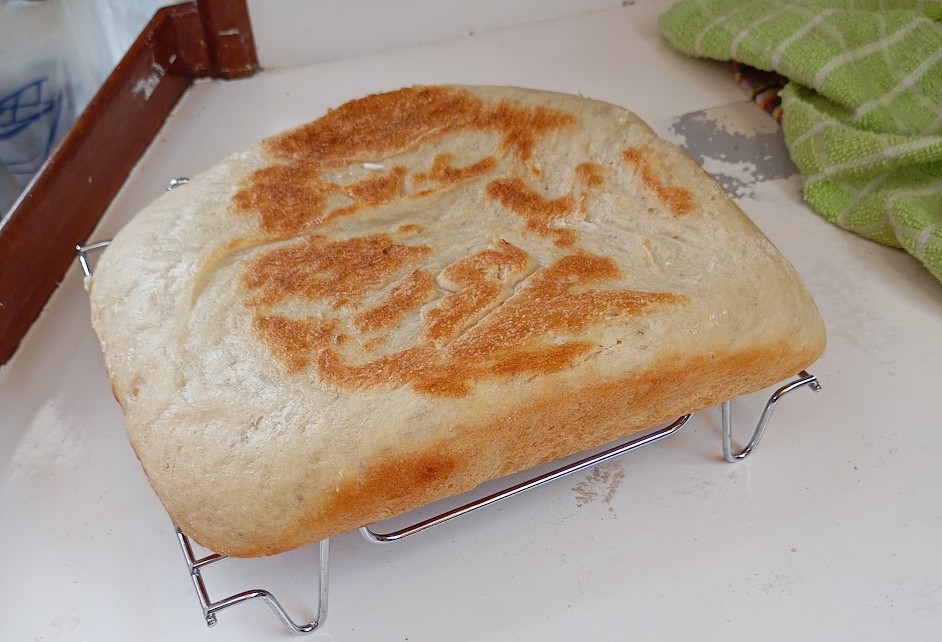
As my shop bought bread had run out I decided to make some bread with fresh flour I had bought in Biak. When I opened the flour container I was greeted by whole bunch of Weevils. The second flour container was also similarly infested. I really dislike weevils, the flour went over the side immediately. Bread was off the menu but my craving for bread only intensified.
Searching around for a bread substitute I came across some wholewheat crackers. They had been on the boat for a while, but were still in their packaging. I tried one, they were very hard, rock hard, but they tasted OK. I set about making a snack with some cheese, pickled onions and sun dried tomatoes, lovely. Chomping down on the cracker I felt one of my back molars break, sure enough I spat out a big piece of tooth. Probing around with my tongue I could feel a big hole.
But my tooth was not finished disintegrating, the following day I was chewing something else and forgot about the broken tooth when the second bit of my molar detached. Now I had a huge crater in my gum which needed dental attention. The front part of the tooth was still intact but the back half had gone completely.
So, its obvious the weevils caused the broken tooth. If there were no weevils the flour would not have been thrown out and I would not have resorted to chewing rock hard wholewheat crackers. Thankfully, there was no pain but I knew it would be only a matter of time before pain, infection or both would set in. Oh disaster, this was very serious, I would have to find a dentist somewhere in PNG.
But first my mission was to sail across the top of Manaus Island and over to New Hanover and then across to Kavieng to check into PNG and complete the customs, immigration formalities etc. The wind and a strong current were still against me along the top of Manaus Island. I opted to sail and motor inside the northern fringing reef, Challenger Reef, as far as Manaus.
Inside the reef proved to be calm and sheltered from the offshore swell by the fringing reef There were a few shallow spots to be navigated but they usually showed up with a change in the water colour. Half way along the top of Manaus Island I found a spot late in the afternoon to anchor for the night. The spot I picked looked deserted a good distance from shore behind a reef. I had been warned of rascals along this coast so wanted to keep a low profile. Of course, once I had anchored, seemingly out of nowhere the canoes started to come out. The locals were very friendly and I did some barter for fresh fruit, coconuts and sweet potatoes. The place was called Ndromalmal Station and apparently government land and safe.
The following morning I was on my way again early and was soon popping out of the reef back to deep water and on my way to Kavieng. After a few hours of fickle wind on a lee shore we managed to clear the coast, picked up a favourable wind, the sailing was good, in the right direction for a change. A couple of days sailing and we reached New Hanover where the wind died. I entered through the outlaying reef and anchored in the lee of an Island to the east of Cape Entrance for the night. It had been a good sail from Manaus Island with a few squalls and wind shifts along the way, averaging just under one hundred miles per day.

The first night out of Manaus I had a bird trying to land on the boat. I hate birds on the boat, they make a terrible mess. They are also really creepy when they pop up out of nowhere at night, quite scary. Anyway, this particular bird was very stubborn (stupid) and persistent. After several aborted landings he landed on the wind instrument. I managed to beat him off with a rope end but not before he had broken the plastic wind direction indicator vane. I was really upset. Not satisfied with this mischief he returned twenty minutes later and tried to land on top of the mast. This time he got tangled up with the Windex and managed to skew it around so the arms were pointing abeam. In less than an hour the bloody bird had wrecked all my wind indicating gear. A different bird had wrecked the windex in the Philippines and Jessica went up the mast in Puerto Princesa to fix it. Now there would need to be another trip up the mast, not a task I enjoy.
I managed to repair the wind vane on the Clipper wind instrument. I cut out a plastic west system plastic spreader to the approximate shape of the existing wind vane. Unfortunately the broken one had gone over the side when it broke so my replacement was the best approximate shape I could make. I then roughed up the surfaces a bit and applied epoxy and clamped the two parts together. I gave it overnight to cure before fitting everything back in place. So far is is working well although maybe not so sensitive in light winds I can see no difference when the wind picks up over six knots.
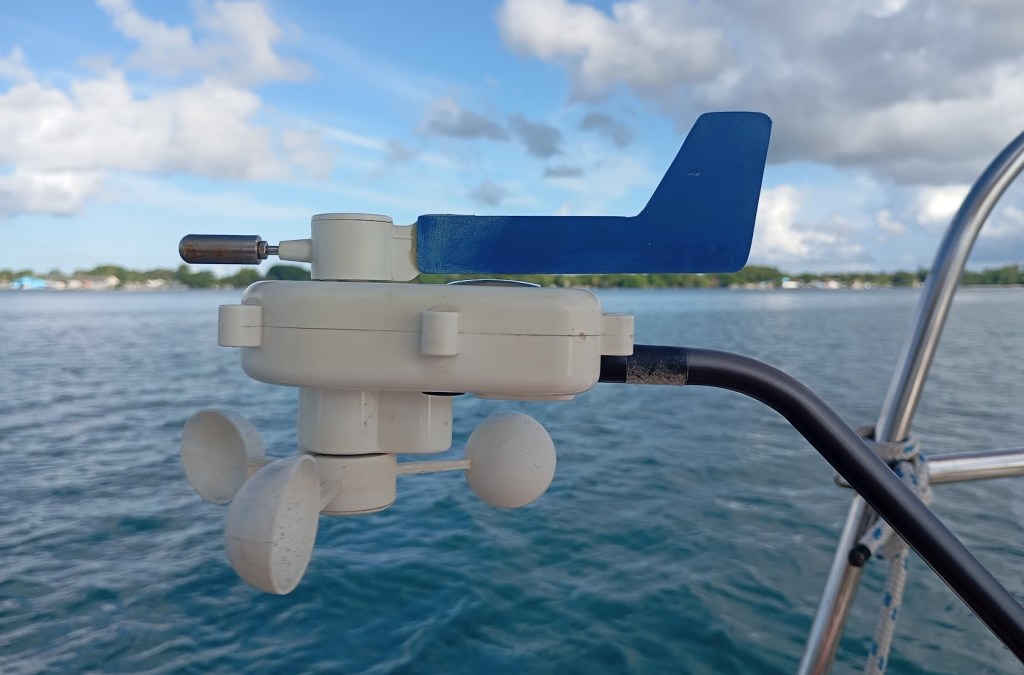
The following day it was a challenging sail to Kavieng, starting with motoring in calm, then a strong wind on the nose and tacking followed by a beautiful beam reach before we motored into the anchorage. I dropped the hook and let out plenty of chain, on a good scope I would be able to sleep better. Once settled I cracked a beer, I was happy and satisfied to have arrived. It had been a long haul against the wind and current from Biak.
The next day after a great sleep I set off with the ships papers, the (important) ships stamp and my passport to the Customs office in Kavieng. The check in process was quick and easy and I was officially in the country. Now my mission is to try and find a dentist.
DENTAL REPAIRS IN PNG

2 March 2025
Now that the check in process had been completed my next priority was to find out if there was a dentist in Kavieng and if not where the nearest dentist could be found. Enquiries with the locals didn’t reveal much, outside of the negative the best result I could get was “I could try the hospital, they may have a dentist”. I found this surprising as Kavieng is not a big place, I assumed the locals would know if there was a dentist in town. But, judging by the condition of the local’s teeth, they had most probably never seen a dentist.
I attempted to visit the hospital but it had been temporarily closed down. Apparently, a couple of nursing staff had been assaulted on their way home from work. The hospital was closed down; the nursing staff were unhappy. It took a couple of days to sort out the problem before it opened up for business again. Finally, upon arriving at the hospital I was surprised and encouraged to see a hut with a “Dental Clinic” sign above the door.
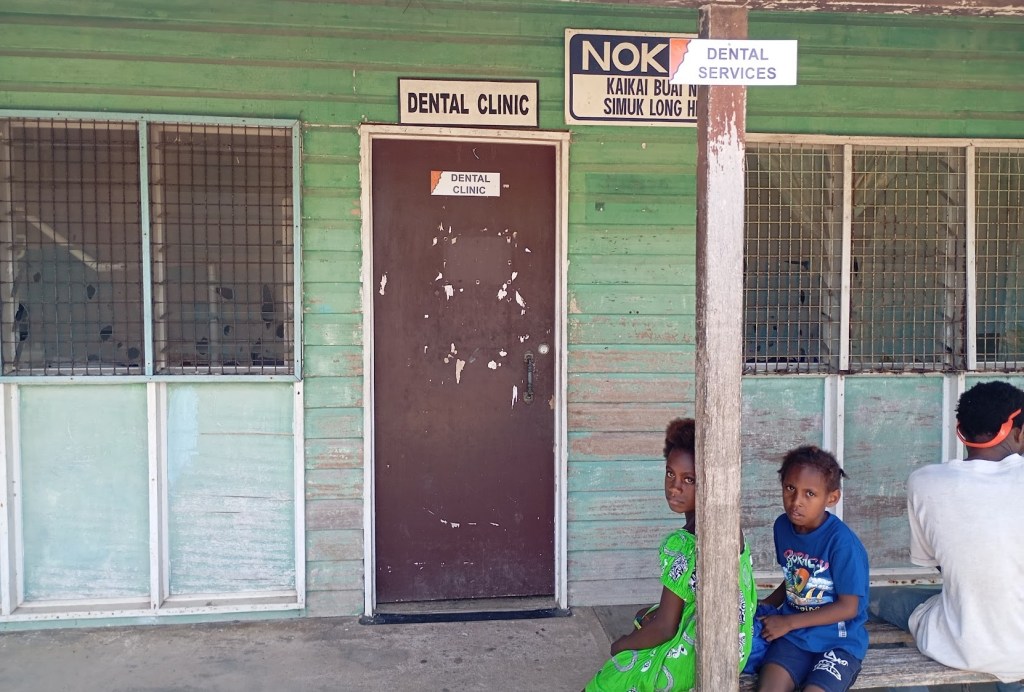
Upon entering the clinic I was met by a gentleman behind a desk, the receptionist I assumed. I explained my problem to him, he came around the desk and had a look in my mouth. Oh yes, he said, I can fix that, he led me to another room, sat me in the dental chair and said he would be back in a couple of minutes. Now I had to assume that the receptionist was in fact the dentist even if he didn’t have a white coat on.

Soon a nurse appeared and started preparing various tools and equipment, she was dressed like a nurse, all prim and proper. The dental chair, side basin and furnishings had all seen better days, the chair didn’t adjust and there was no running water to rinse with. I have a deep-rooted fear of dentists, mainly caused by a bad experience many years ago when a German butcher, masquerading as a dentist caused me to be hospitalised for weeks and eventually receive specialist treatment in the UK. It’s a very long story. I sat in the chair and weighed up my options, deciding to get the job done here and now – no time to be chicken.
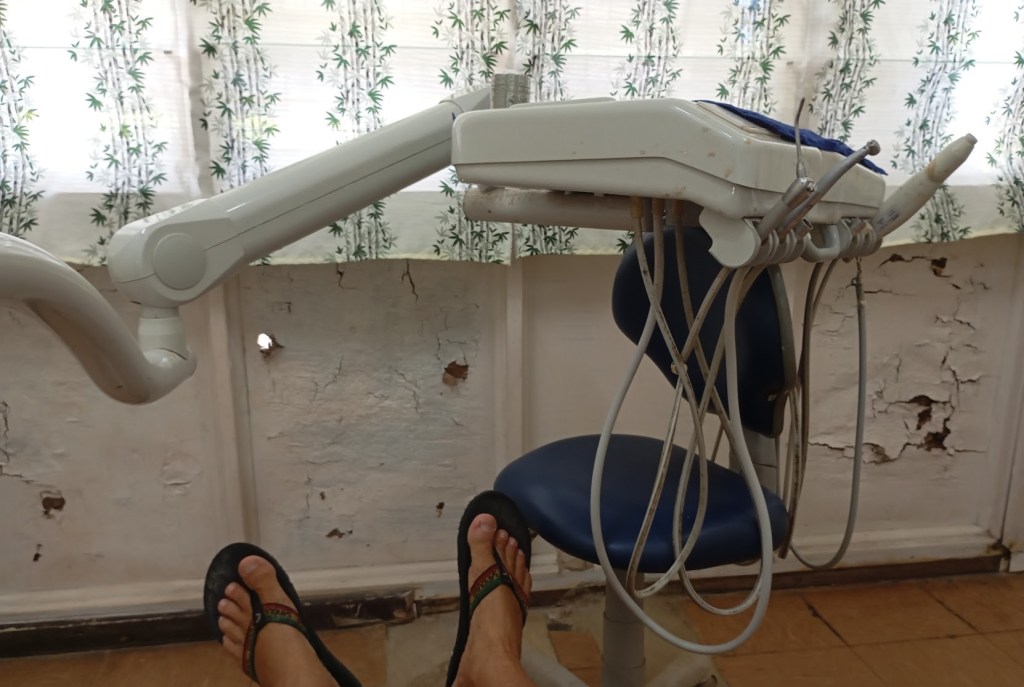
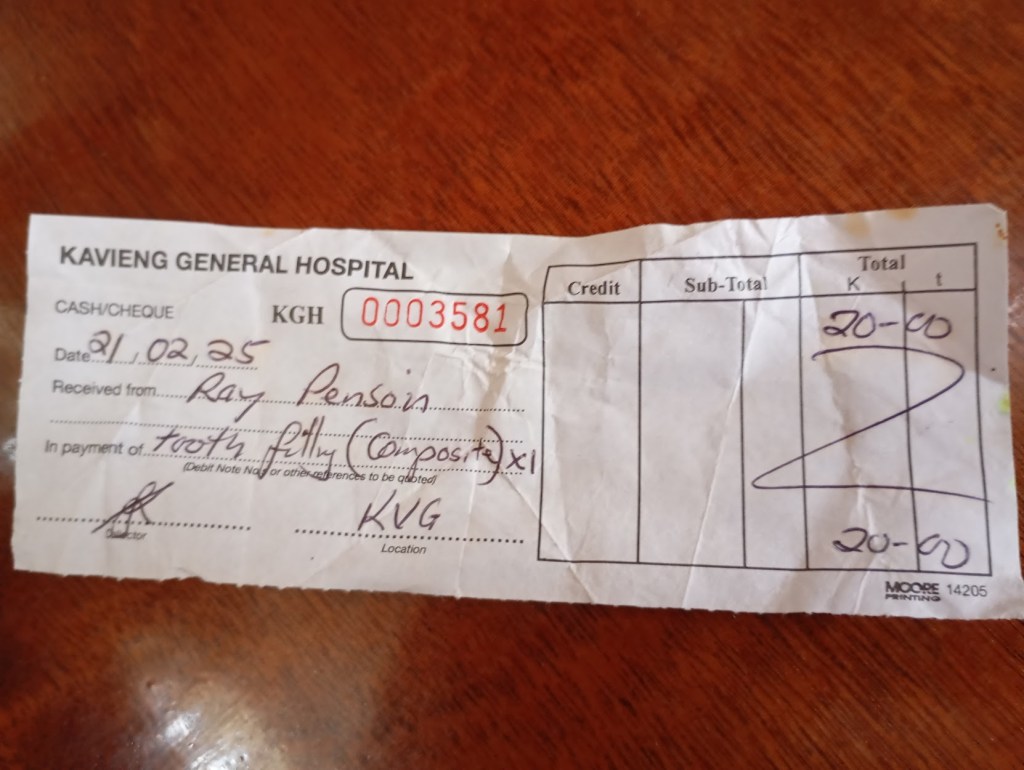
Well, the dentist did a good job and plugged up the hole. He was not gentle, he got the job done with the minimum of fuss. The bill came to 20 Kina which is about 8 NZ$. Good value. My teeth all feel like they have been rearranged in my mouth, I suppose I will get used to that.
With my dental worries out of the way I could relax and explore Kavieng. It’s a nice, relaxed place and the locals are all friendly and helpful. Don’t know what it would be like after dark. I had quite a large reprovisioning to do after my long trip from Baik and spent some time trolling around the local stores. In these remoter towns you usually can’t get all the items you need from one store, it requires patience, scanning the shelves for desirable goods. All the basic staple of life were available but the tasty and desirable tit bits were missing. Looks like my diet is going to be quite boring for a while longer.
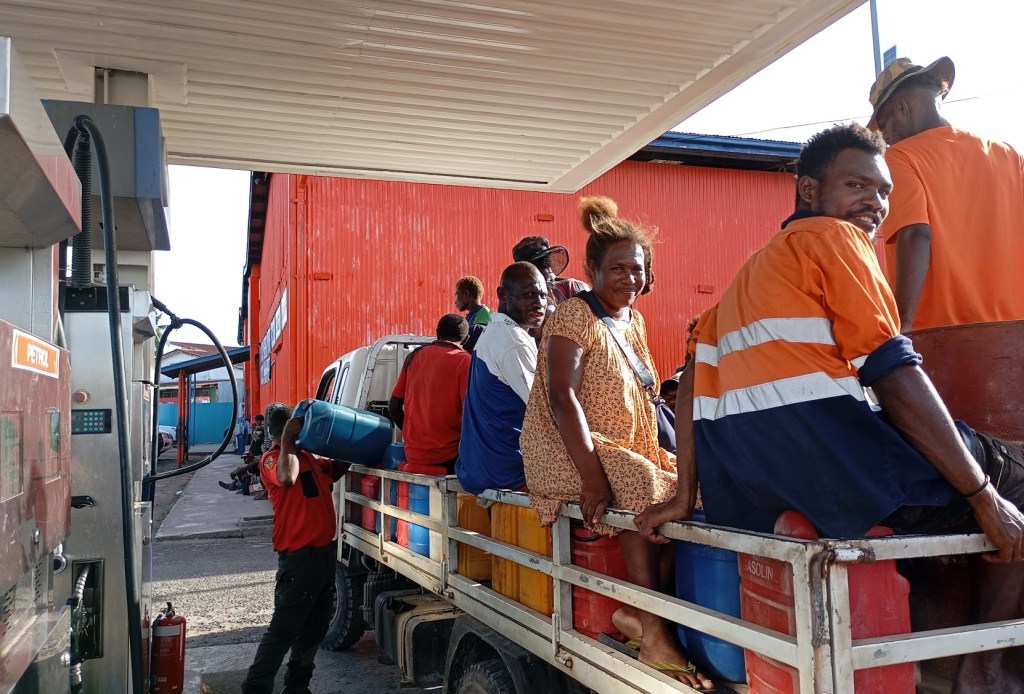
My next chore was to fill up my jerry cans with ninety liters of diesel. I took the dinghy across the harbour to the market boat landing and carried the empty cans up to the gas station. Once the cans were full they were loaded onto the fuel truck for drop off. This is a brilliant system, the truck does a circuit dropping people and fuel off along the way – and its free. I was dropped off at the dinghy with my jerry cans and was soon back at Truce loading the fuel on board.
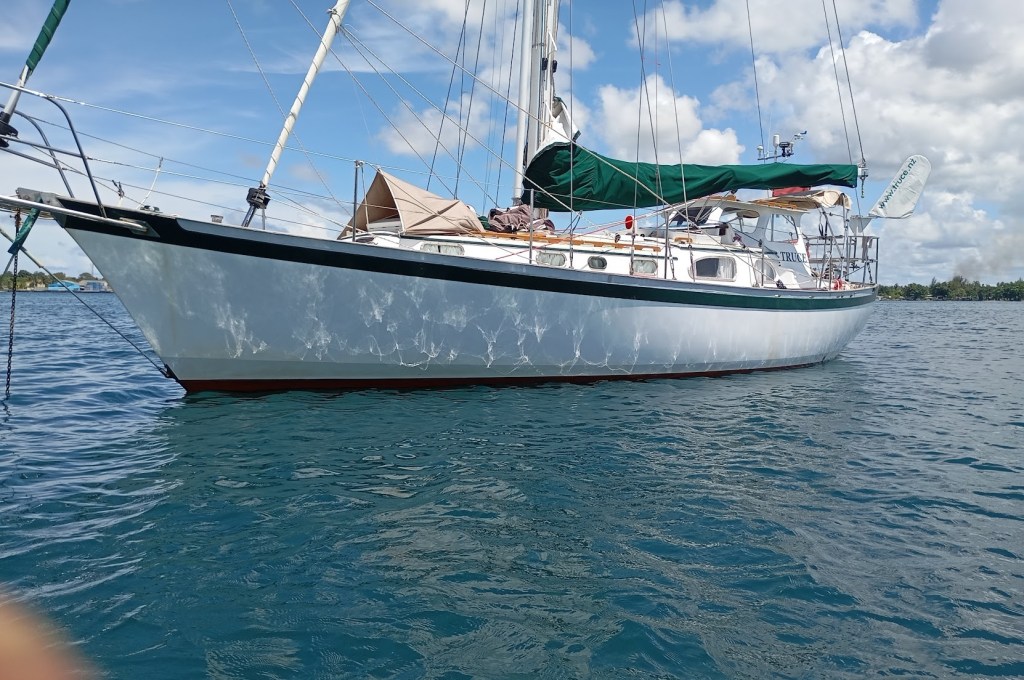
On the trip from Indonesia Truce has grown a nasty ring of slime and barnacles around the waterline, it looks disgusting. I set to with a spray bottle of bleach, plastic scraper and scrubbing brush. It took a few hours but the results are good. The boat looks more like her old self from a distance. My arms are not too happy, feeling like they will drop off.
Three young guys came into the anchorage on a catamaran they are delivering from Fiji to Indonesia. One of them offered to go up the mast on Truce to fix the windex. I accepted his offer immediately. It turned out that the guy is a rigger and he also offered to inspect the rig top down. Again, I eagerly accepted his offer. The results of his inspection were positive, nothing untoward going on and I now have a volume of photos of the rig.
My time in Kavieng is coming to a close. Its been a good stop. I have fixed my teeth, refuelled, reprovisioned, repaired and relaxed. Now I and ready to go again. My plan is to sail over the north side of New Ireland and visit some of the outer islands before dropping down to Taro to clear into the Solomon Islands. My big concern is the very strong and persistent current against me on that route together with the easterly wind that seems to be equally stubborn and persistent. Hopefully, it will moderate in the next couple of days.
BEATEN BACK BY THE CURRENT AND FICKLE WINDS
9 March 2025
My time in Kavieng has come to a close. It’s been a very good stop. I have fixed my teeth, refueled, reprovisioned, repaired what was broken, maintained essential gear, inspected the rig and relaxed. Now both Truce and I are ready to go again. My plan is to sail over the north side of New Ireland and visit some of the outer islands before dropping down to Taro to clear into the Solomon Islands.
My big concern is the very strong and persistent current against me on the route together with the easterly wind that seems to be equally stubborn and persistent. The adverse current has been a constant since departing from Biak in Indonesia. Hopefully, it will moderate in the next couple of days.
I weighed anchor and Truce and I motored out of Kavieng harbour through the North Channel. The plan being to go along the coast of New Ireland and stop off at some of the outlaying islands. Tatau island, Tanga Island, Ambitle, and Nissan Islands looked like interesting stops along the way. I didn’t intend to stop at Lihir Island, I had spent time there previously, it has the second biggest hole on the ground I have ever seen, a huge goldmine.
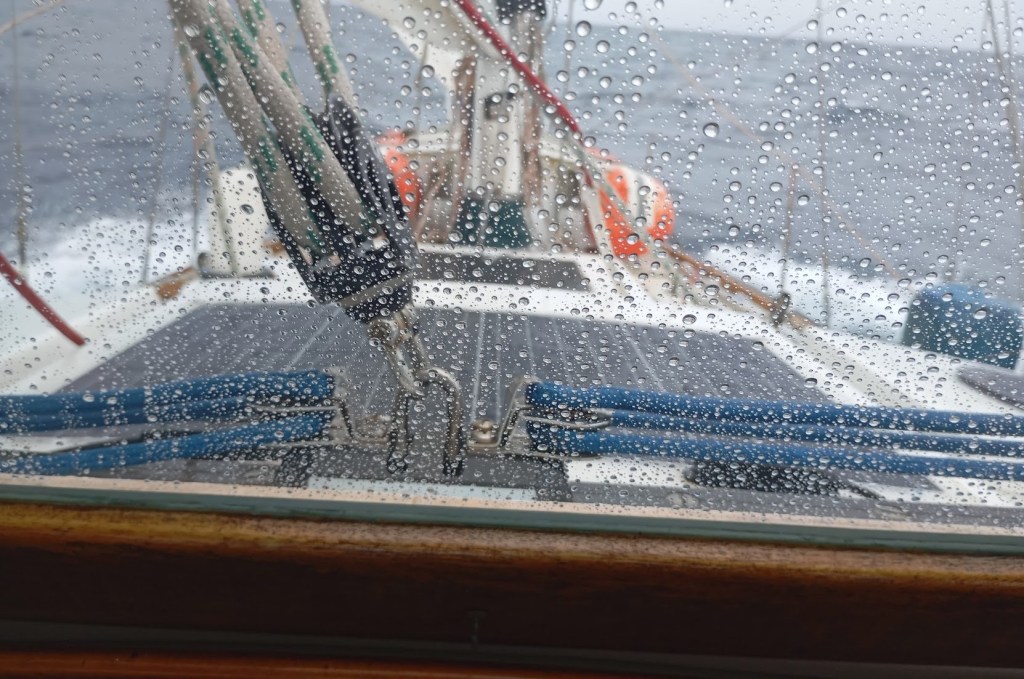
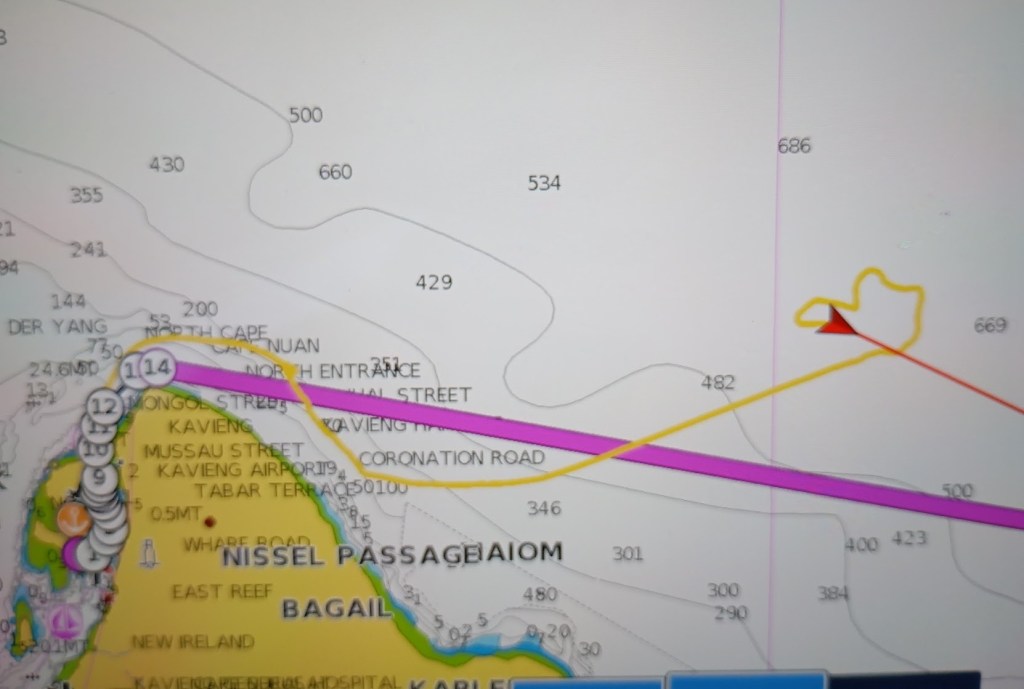
Departing Kavieng was hard work, a light onshore wind threatened to put us onto a lee shore, thankfully the wind freshened a bit, allowing us to head away and clear the land. Then the wind died and the current pushed us westwards, losing ground and making interesting track patterns on the navigation plotter. There followed a series of squalls making for uncomfortable sailing, on a positive note I was able to fill the water tanks with nice fresh rainwater. This carried on for two days, yo-yoing back and forth with the squalls but slowly making progress eastwards. The slow sailing against the current in fickle winds was becoming tedious and tiring. Rest was almost impossible as Truce required constant attention in the light and variable conditions in order to make progress. Finally, the wind died completely, and the current once again started to push us back towards Kavieng at two knots. There was nowhere to anchor, no way of arresting our westwards drift, we just kept losing hard won ground. I was tired and had a few choice words for the weather gods.

Towards sunset on the second day a squall approached. I watched the approach with interest, perhaps it would give us some favourable winds. Unfortunately, it wasn’t the case, the squall was ferocious with strong easterly winds and lashings of rain. Truce was reefed down and I couldn’t fight it, if I hove to we would still be losing ground as the current pushed us west relentlessly.
The situation was hopeless. I decided to turn around and head back towards Kavieng, go through the Albatross Channel and then head east along the south coast of New Ireland where there would be little current and lighter winds. As I turned off the wind Truce picked up speed and was soon sprinting over the waves, it was pitch dark, the wind howling and the rain hosing down. I was soaked to the skin but it felt so good to be sailing again, I didn’t care if we were gong the wrong way. The seventy miles back to Kavieng took us twelve hours, we were anchored in a lovely, sheltered spot in the Albatross Channel before sunset.

The last few days had been a struggle and I was feeling a bit battered and bruised. However, once anchored in the peace and tranquility of Albatross Channel I knew the decision to turn around had been the right one.
PNG – COASTING NEW IRELAND

16 March 2025
Unfortunately, shortly after I had anchored in the Albatross Channel my fishing rod and fishing gear were stolen from the back deck. I always remove any tempting items from the cockpit when at anchor. I had already removed the binoculars, navigation tablet and other bits and bobs safely below. I then put the kettle on for a cuppa and was filling in the logbook at the chart table when I heard sounds outside. I jumped up into the cockpit and saw a canoe with two guys in it paddling away downstream, then I noticed my fishing rod was missing. I shouted after the guys but they had suddenly developed selective hearing, their paddling picked up a pace. My fault entirely, they probably only came along to say hello (as everyone does here) but the sight of a fishing rod unattended was just too much temptation. Oh well, one less thing to worry about and fishing with a rod from Truce has always been a dangerous game, I hope they have better luck with it than I had.
The day after the fishing gear incident I sailed the short distance across to Mission Bay on Djaul Island. A lovely enclosed and calm anchorage. The locals came out in canoes to trade and were very shy. A young girl gave me a masterclass in topping coconuts for the juice and then splitting them for the flesh.
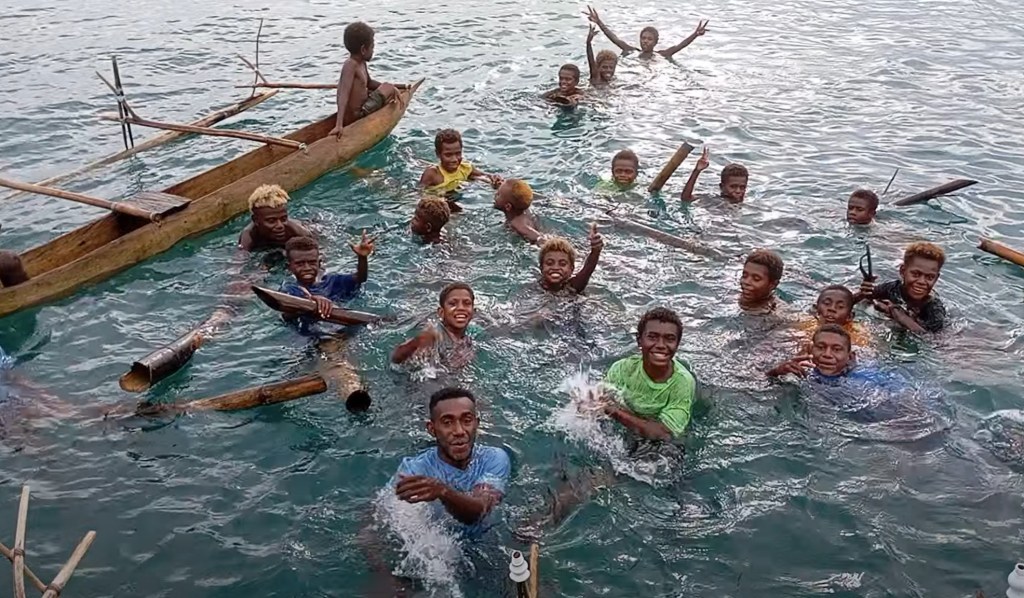
From Mission Bay I coasted along the south coast of New Ireland. Lovely sailing in light breezes and calm seas. What a contrast to the struggles I had on the north coast. I stopped at Katherine Harbour and had a riotous welcome from the schoolchildren who all swam out to the boat. They were all very excited and were very vocal, too many decibels for me but all good fun. They said they hadn’t seen a yacht for a couple of years. Eventually they became exhausted swimming around and treading water and headed back to shore. A couple of canoes came out later and I stocked up on fresh coconuts and some beautiful sweet potatoes.
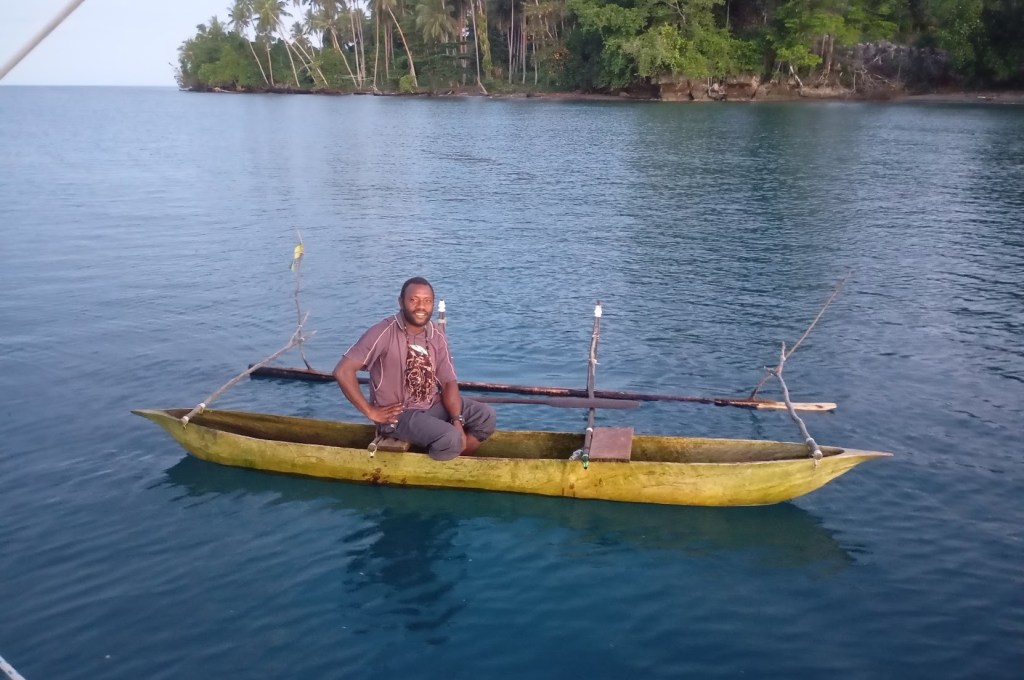
The next stop was Kalili Harbour, a lovely anchorage in calm weather, again locals came out in canoes to greet me. Here I was able to fill my jerry cans with fresh water from the stream ashore, some of the local children running the bottles ashore in their canoe, they were rewarded and both parties were happy with the deal. As usual I did some barter for fresh fruit and veggies.
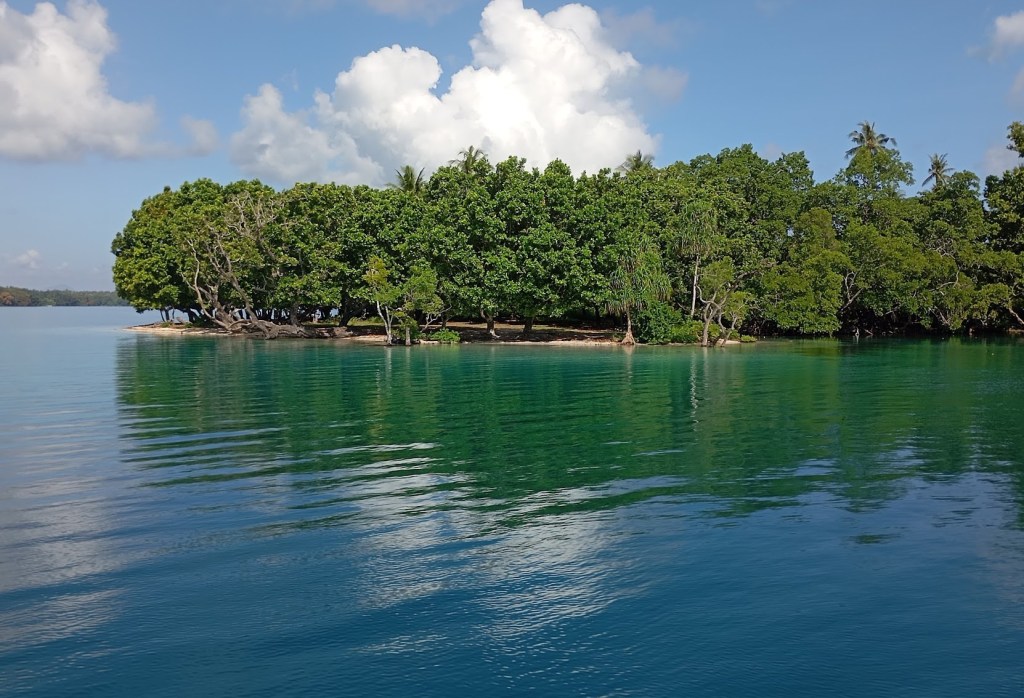
My next destination was the Duke of York Islands. The wind went light and the tidal current held me up, I was unable to make the entrance through the reef passage before dusk so laid off for the night. I found the currents here very strong and it was a restless night sailing back and forth trying to hold position off the island.

In the morning I anchored in a small, almost enclosed pool by the village. I was encouraged to put a line ashore, I declined. Being tied ashore can hinder a fast getaway, its also easy for the locals to cut and steal the line. Here I was promised good security from the headman and he posted a watchman on shore overnight. This was all very well but I missed having the locals visit and interact, it was all a bit overbearing and I departed the following morning.

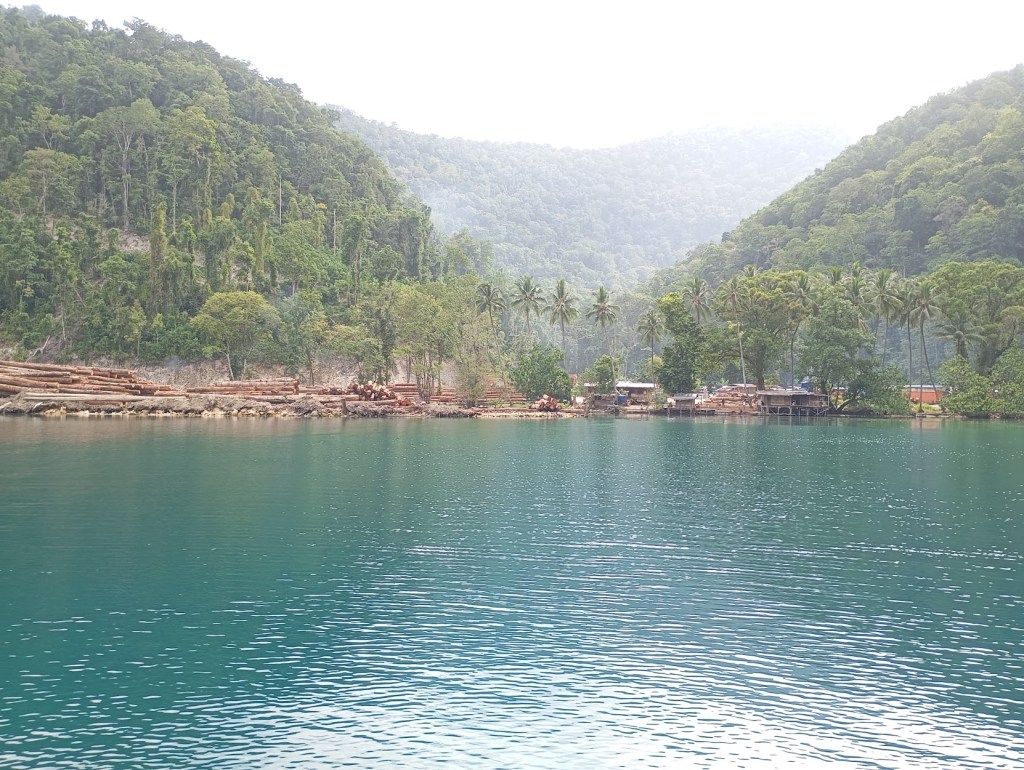
From the Duke of York islands I sailed over to Port Sulphur on the mainland. I arrived at the anchorage at night and was surprised to see bright lights and activity onshore. Here there was a big logging operation going on run by a Malaysian company. What a huge pile of timber they had ready for export and what a mess they were leaving behind in the forest.
I started to get a bad feeling about security. It was only men who came out to visit in canoes and they were asking too many questions, things like was I alone, did I have a gun onboard, where was I going next etc. The vibes had changed slightly, I was not feeling comfortable. With this in mind, I decided to head out early the next morning before dawn and move along the coast.
Next on the route is Bouganville, but the wind is not quite right and a strong current is flowing down St. Georges Channel to the south. I had planned to anchor in a bay (English Cove) at the southern end of New Ireland before crossing over to Bouganville. But, I still had a gut feeling that the security situation didn’t feel right. As I approached Cape St. George the wind picked up to a good twenty knots. I decided not to anchor overnight but to take advantage of the breeze, sailing onwards towards Bouganville and clear of any possible troubles at English Cove.
ARRIVED GIZO – EXHAUSTED

20 March 2025
Truce and I needed to get 130 miles across the St Georges Channel between New Ireland and Bouganville as quickly as possible. There was a two-knot current running that would set us down to the SW. On passing Cape St. George we had a good wind, we set off, hard on the wind, close hauled on port tack. At this speed I only needed twenty four hours to reach the lee of Bouganville.
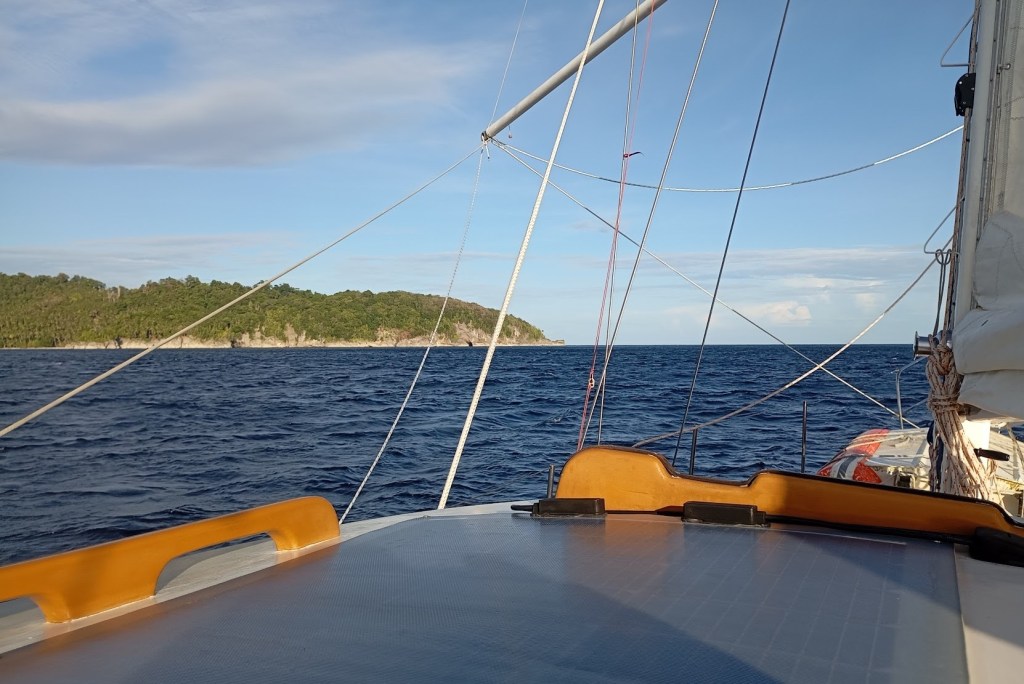
All went well for the first few hours, we reeled off the miles, then the wind started decreasing, our heading fell away, our speed dropped and the current had us in its clutches. The fight was on, eventually after almost two days we made it out of the current but had lost 45 miles to the south. My plan to get into the lee of Bouganville and sail along the coast was shattered. There would be no rest stops and overnight anchorages on Bouganville for Truce and I. For the next few days we struggled to get back to the north and onto track for Gizo, our clearance port for the Solomon Islands.
We tried at every opportunity to make northing. Each time we made a few miles to the north the wind would disappear and a squall would come along, day and night. Then it was reefing for the squall, fast a furious sailing for a short while, drenched by the rain, then the wind would disappear and we are left stranded rolling and bucking on a washing machine sea, no wind, sail flogging and slatting, and nerves shredding. This type of sailing is hard on both man and machine, the sails and gear really take a beating.
I noticed on the chart there was a notation ‘Planet Deep’ in this area south of Bouganville, its certainly deep at over 8,000 meters. Why it should be notified as Planet Deep I am not sure.

After five days we were clear of Bouganville Island but still south of our course to Gizo. On our track to Gizo lay Sterling Island, a possible rest stop? I need not have bothered thinking about it, we passed 3 miles to the south, downwind and down current. The wind was favourable, we carried on.
Eventually we made it to a position twenty miles west of Gizo where we encounterd another strong south flowing current. Twenty four hours later after light winds, squalls and adverse current we were still in exactly the same spot. I was so frustrated. We were playing a cruel game of snakes and ladders with the weather Gods. That evening we had made a few miles when the wind died, the current was setting us down onto an island and a lee shore. The only option was to bear off and lose precious miles gained. I cracked, I could take no more.
The engine went on, Mr. Yanmar would take us the last twenty miles into Gizo where I planned to arrive at sunrise. On the way into Gizo there are some shallow parches and reefs, nothing too challenging, there is an easy channel into the port.
As we motored towards Gizo it was flat calm, not a breath of wind, a lovely starlit night. If I had still been sailing, with no wind, we would have been swept further south by the current. I comforted myself that putting the engine on was the only option.
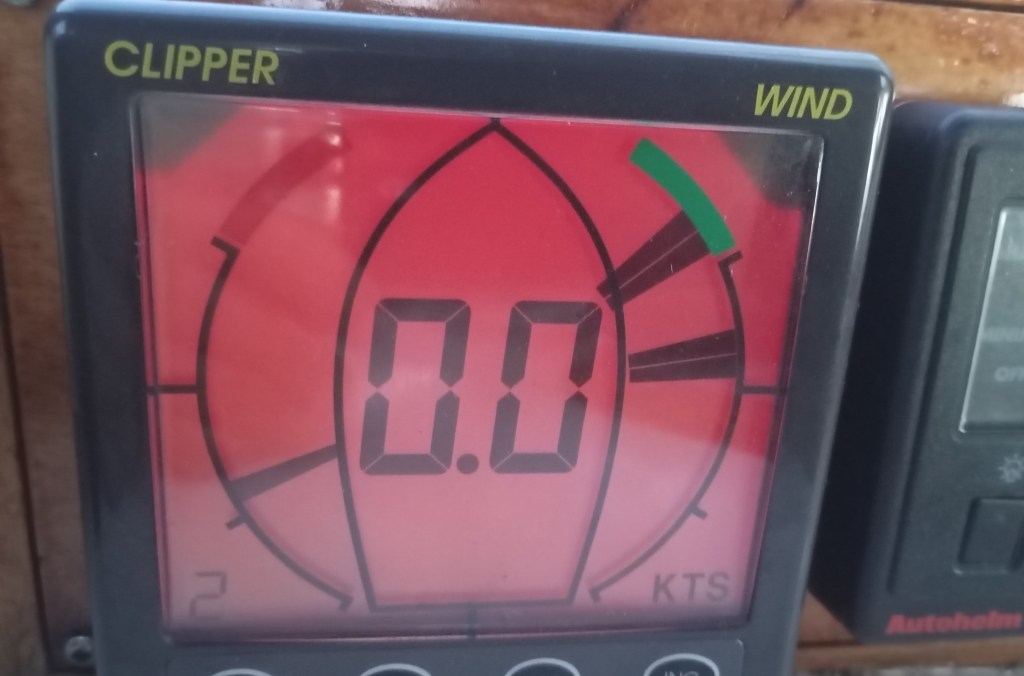
As I was daydreaming, I suddenly noticed the depth sounder was reading 5 meters! Immediately I put the engine into neutral and we slowed, as we slowed the depth reduced, I gave a kick astern and we stopped. The depth now read zero, that means nothing under the keel! I checked everything, a flashlight over the side, we should be in deep water. Then I realised my mistake. I was so tired and my brain so befuddled, I had been reading the wind instrument instead of the depth sounder. As we reduced speed so the relative wind reduced to zero as we stopped. Clearly, I had not been thinking straight. I was very tired.
Just a couple more hours and I dropped anchor at Gizo as the sun came up. I was exhausted. Just time for a couple of hours sleep before getting ashore to do the clearance formalities.

CLEARING INTO THE SOLOMONS
27 March 2025
After arriving at the Gizo anchorage I had a couple of hours rest and then gathered the ships papers together and headed ashore to complete the clearing in process. I am not a fan of bureaucracy and find the clearing in/out process tiresome, to differing degrees, depending on which country it is. The process is basically straightforward, customs, Immigration and Biosecurity/sanitation/Port health all play a part and sometimes the Harbour Master wants some action as well.
To make the process more entertaining each country has its own procedures and paperwork. The various authorities don’t seem to communicate with each other and it usual to answer the same question on multiple forms, even the same information up to three times on the same form. Thankfully, Both PNG and the Solomons are pragmatic and easy to check in and out of. The Process in Gizo was efficient and painless. Of course there is usually a $$$ cost.

The Customs office in Gizo is easy to access being in town. The only picture hanging on the wall is a very old photo of Queen Elizbeth II. I asked why it was still there as she has passed away. I was told that no one had said take it down! So, I suppose it will be there forever until some higher authority makes an executive decision.
Once check in was complete I returned to Truce, stowed all the paperwork and passport away, I could relax now and take my time to explore the place. First off it was to find the ATM and get some cash, this was successful, the ATM was both operational and had cash.
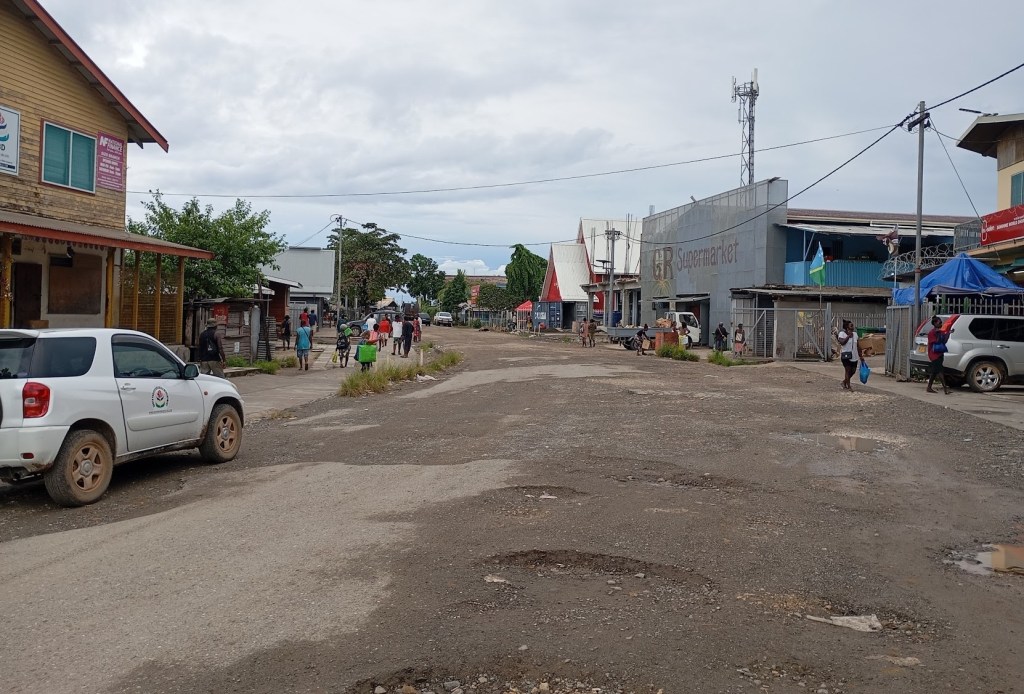
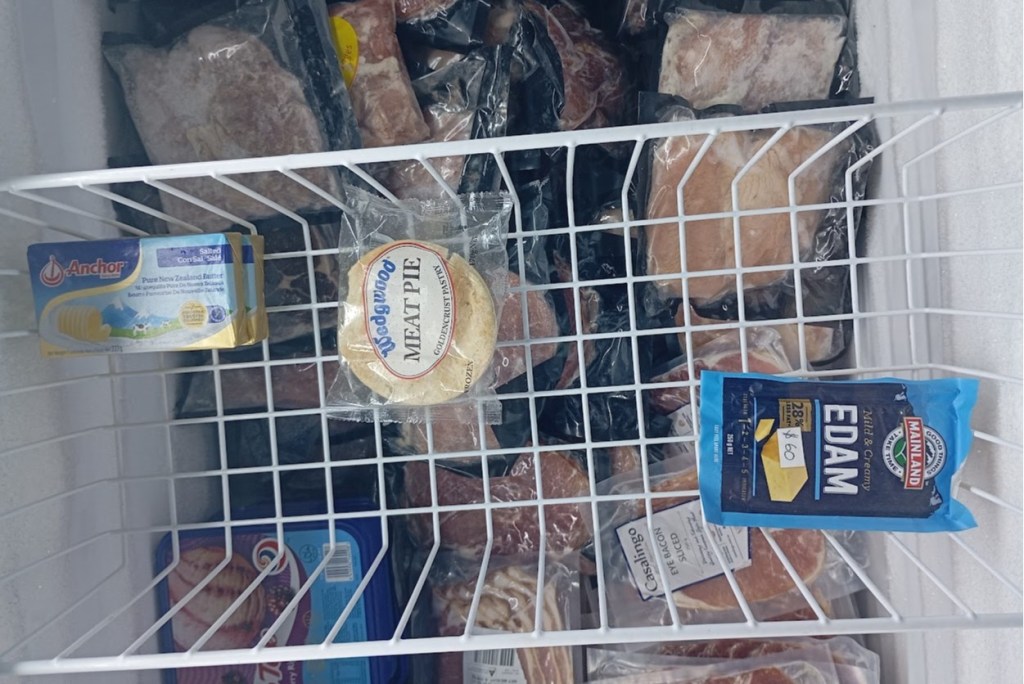
Gizo town is not a pretty place but it has a good selection of stores selling the basics of life. The shops are mostly Chinese and I quickly noticed that the prices didn’t differ from store to store, not much competition going on. I was able to buy fresh bread and eggs, something I have been missing. One of the local ladies directed me to a small store on the edge of town where I could but exotic items such as meat and cheese. Sure enough, after a short trek, I found it. There was a freezer with the goodies in it. I decided to return with a cold bag at a later date to pick up the butter and cheese, but in the end I didn’t bother and decided to wait until I got to Noro, the next town I would visit.
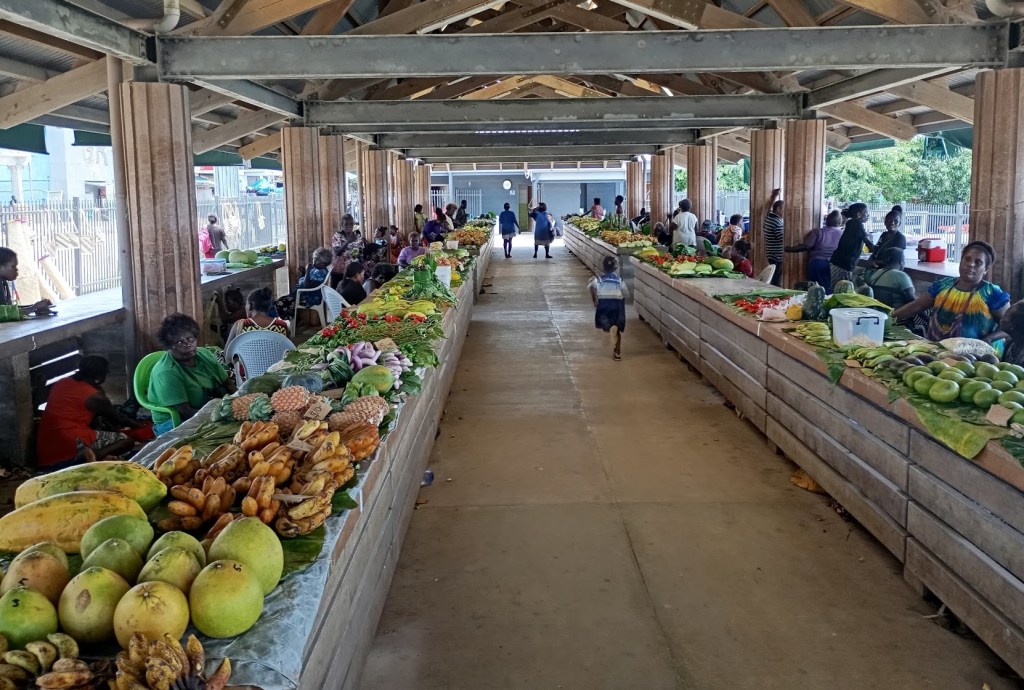
The fresh fruit and vegetable market was a delight, neat and tidy and all the goods nicely presented. This is a delightful way to shop. The ladies are shy at first but soon open up with lively chatter and a gentle inquisition, as is the way with market ladies everywhere.
At lunch time I found a café (PT 109) on the waterfront overlooking the anchorage where I could tie up the dinghy, very convenient. I treated myself to a Berger and chips washed down with the local brew, lovely. So good to have good food cooked by someone other than the lousy cook on Truce.
I slept well that night, secure in a calm anchorage and the difficult and exhausting passage is behind me. Getting from Kavieng to Gizo had been a struggle, I was very tired. I am expecting an easier passage through the Solomons where there are many places to stop if the weather is adverse. The security here is not as dynamic as PNG, although, I still need to be streetwise. I have not been to the Solomons before so am looking forward to this next section of the voyage.
WINDLESS FROM GIZO TO CONFLICT BAY

5 April 2025
Good news, the Solomons beer is good and reasonably priced, first impressions of a country can always be gained through its beer, positive so far.
Departing from Gizo there was no wind and no wind on the forecast for a few days. To make any progress I had to use the motor, there was no option. By early afternoon we crossed the shallow reef between the outlaying islands and anchored off Boboe Village. The engine was switched off and would have a few hours to cool down before evening as its acts like a storage heater, just what you don’t want in this hot climate.
Children came out from the village in canoes, child size canoes that had been built by their fathers. The children were hyperactive so I tasked them with collecting some coconuts for me from a nearby island. They returned with lovely fresh coconuts and were happy with their reward.

The next morning we were away again, motoring out from the anchorage and finding just enough breeze to make headway towards Noro, just eleven miles distant. We arrived in the early afternoon and picked up a mooring in the under-construction Noro Marina. There are a few moorings here in a sheltered bay. This will be a superb facility when it is complete. Hilde looks after the marina, a lovely lady who is most helpful and knowledgeable. Noro is a relaxing place, a contrast to the dust and bustle of Gizo. There is an excellent market, shops and a store that sells a wide range of Australian and New Zealand foods, meats, cheese, butter, chocolate, beers, wines etc.
Noro also has a duty-free fuel dock for overseas vessels. There is a minimum delivery but by a couple of other yachts clubbing together we manage to order sufficient fuel to meet the minimum and top everybody off. A large number of jerry cans and fuel containers were needed. Truce being the smallest yacht only required 120 ltr to top up the tanks. The fuel dock only took cash and getting cash proved to be a mission.

The ATM had run out of money, and I had to que up at the bank, it took a while and a long hot walk. The ATM’s frequently seem to run out of cash. One of the locals told me it was because the Chinese traders worked in cash and then shipped the cash back to China. This was causing the Solomons central bank to be short of cash in circulation. If this is true or not, I have no idea.

After a couple of days in Noro restocking, refuelling, repairing and relaxing, Truce and I headed out again. This time heading south through the beautiful Noro Passage. This a lovely waterway threading between reefs and islands, Unfortunately, on this day there was torrential rain, reducing visibility and no wind. The rain was good to wash the boat off and top up the freshwater tanks. That afternoon we anchored at Rendova Island inside a protected lagoon. It was still raining heavily and two girls (Sisters) came out to visit in a canoe, they were completely bedraggled and shivering cold. They brought the most appealing and healthy vegetables I have ever seen. Despite the cold and rain they were cheerful and happy to trade. As they had such amazing produce and had endured the weather to get to me I gave them more than I probably should have. But they were delightful young ladies and cheered me up. We were both happy with the trade and that’s all that matters.

The following day we were on the move again, the rain had stopped but it was gloomy and overcast with no wind. We motored. The evenings anchorage Punutu Bay on Vangunu Island was a strange place. Upon arrival at the anchorage a large dead crocodile floated past, belly up. The day was too far gone to look for another anchorage so I dropped the hook and went below out of the drizzle to get some food and a cuppa on the go. The following morning the weather was a bit brighter and I could hear voices on the shore. There were groups of people shouting and waving at me from between the trees. The rest just stood and watched like zombies. I went below for my morning kick start coffee, when I came back they were still there. Most strange. I did a little dance on the foredeck for them and got some shouts and waves back. I didn’t feel comfortable, the dead crocodile and the Zombie people were a bit weird. So without waiting for breakfast I weighed anchor and departed.
Another day of windless motoring was ahead. We didn’t go far, just ten miles to another anchorage off Ulukoru Island. This was a good sheltered anchorage behind the island and the swell disappeared. This place is deserted and I didn’t see any people. Quite unusual as in these parts people seem to pop up everywhere. There was however a thriving population of hungry mosquitoes. Very annoying and itchy. I weighed anchor early the next morning. Again, no wind and we motored.
Next was Mbili anchorage, there was another yacht anchored here. A Gentleman came out in his canoe, he introduced himself as the Chief and wanted an anchoring fee and proceeded to give me the hard sell on carvings. I found his attitude annoying, all take and no give, he and his brother had also seemed to have stopped the other villagers coming out to visit and trade. They wanted to have the market to themselves. Their carvings were very good and high quality, another boat brought some for what I thought was an exorbitant price. But they were very happy with their purchase, I suppose it will be a lasting memory for them.
Anyway, I traded for some merger supply of fruit and coconuts, giving out some sandpaper, epoxy glue, superglue and an old (but good) chisel. The recipient didn’t seem too happy with the trade so I cut him off. I can do without a bad attitude. I was going to stay a couple of days here and look around (it’s a lovely anchorage), but didn’t like the hard sell and greedy attitude so moved on at first light the next morning.
We departed through the Mbili passage for the 50 or 60 mile trip across to the Russell Islands. Once clear of the passage a good S’ly breeze filled in, we were close hauled on the starboard tack doing a good speed but aiming a bit too far to the north of the Russell’s. I didn’t care it was good to be sailing again after days of calms.
My joy was short lived as the wind slowly disappeared. At midnight we were becalmed to the north of the Russel Islands. I had intended to anchor there, quite frustrating. A light breeze came back in the morning, from the direction we wanted to go of course. All sail set and close hauled we set off towards the north end of Guadalcanal Island. I was in a dark mood, the adverse winds, calms and clatter of the engine were getting to me. I shouted at the wind gods but they couldn’t care less, they just sent a squall and rain cloud as punishment for my disrespect.
That evening, I anchored in Komimbo Bay, on the north end of Guadalcal, we rolled a bit during the night in the swell. Nobody came out from shore. The anchorage was becoming rolly, there didn’t seem to be anything interesting ashore so we departed at first light to continue our way south. The next stop was on the coast at Tadimboko Bay. Here I got a great reception, many canoes came out and I invited a few of the locals on board, we had many stories to swap. The fruit and veg here was excellent and we did some good trading. I noticed that most of the canoes here were plastic, made locally. Quite unusual to see plastic canoes, they didn’t need the almost constant bailing of the wooden variety. The visitors kept coming late into the night, enjoyable as it was, I eventually had to call a halt and get some sleep.
From Tadimboko we had a 20 mile trip to Rua Sura Island, no wind again today, we motored all the way. The chart is not too accurate here but with the help of a satellite image I found a good spot to anchor just off the fringing reef. I saw one person on shore but no canoes came out.
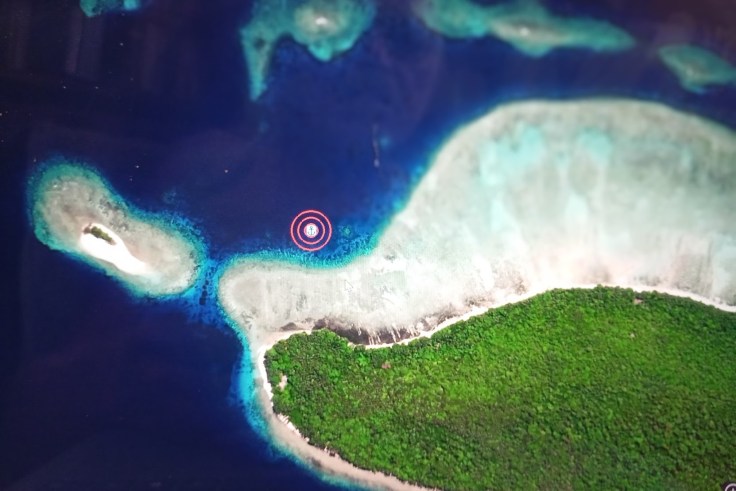
From Rua Sura Island we motor sailed in fickle headwinds towards Conflict Bay. We anchored in calm water just off the Conflict Bay Lodge. A lovely anchorage, protected by the offlaying reef and quite calm in settled conditions. Here I met with Elijah the owner of the lodge and arranged for a meal ashore that evening. A lovely meal, fresh seafood, rice and veggies washed down with some cool amber nectar. I returned to Truce satiated.
I was interested as to how Conflict Bay got its name. Elijah told the story of how, many years ago an Australian blackbirding sailing vessel came to the bay and carried off many of the local population to work in the Plantations in Queensland. The removal was not without a struggle it seems, hence the name Conflict Bay. Many of the descendants of these removed people are living in Australia and have ties back to their families and local community at Conflict Bay.
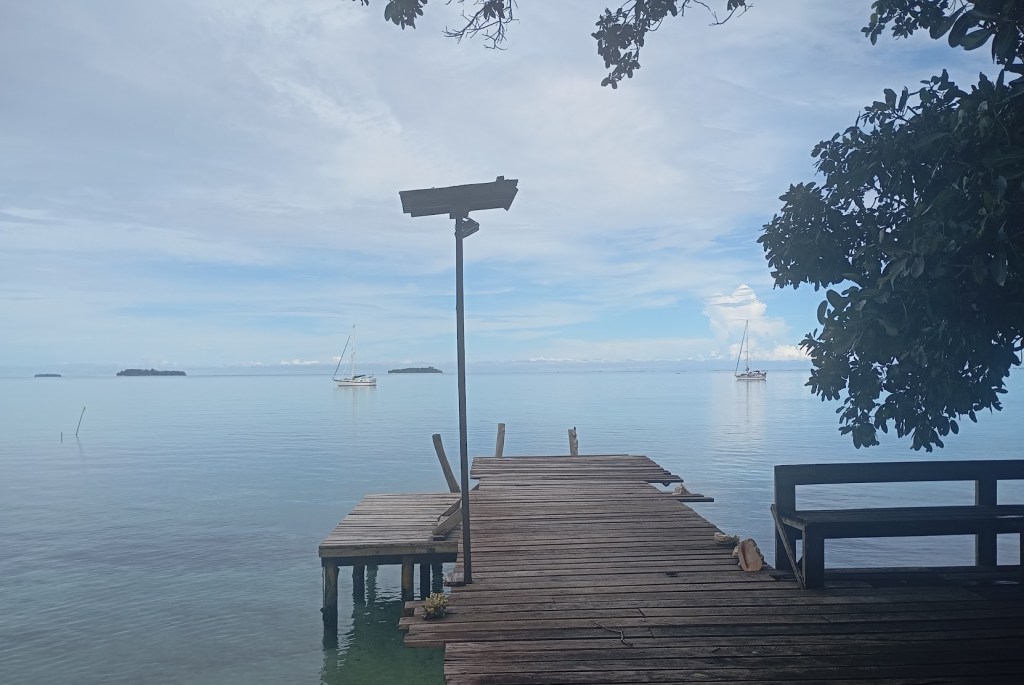
I had been moving steadily since Noro and hadn’t been ashore at any of the anchorages I stopped at on the way. Here, I determined to spend a few days, stretch my legs and have a look around before moving on again.
COASTING SAN CRISTOBAL ISLAND, SOLOMONS

13 April 2025
My time at Conflict Bay was wonderful. A calm anchorage, good walks ashore, some shopping at the local market and stores, dinner ashore at the Lodge. Three happy days. But, time to move on again and I have said my goodbyes to my new friends. Just as I was departing Elijah’s daughter came out in a canoe to bring me some fresh coconuts for the voyage, so thoughtful and really appreciated.
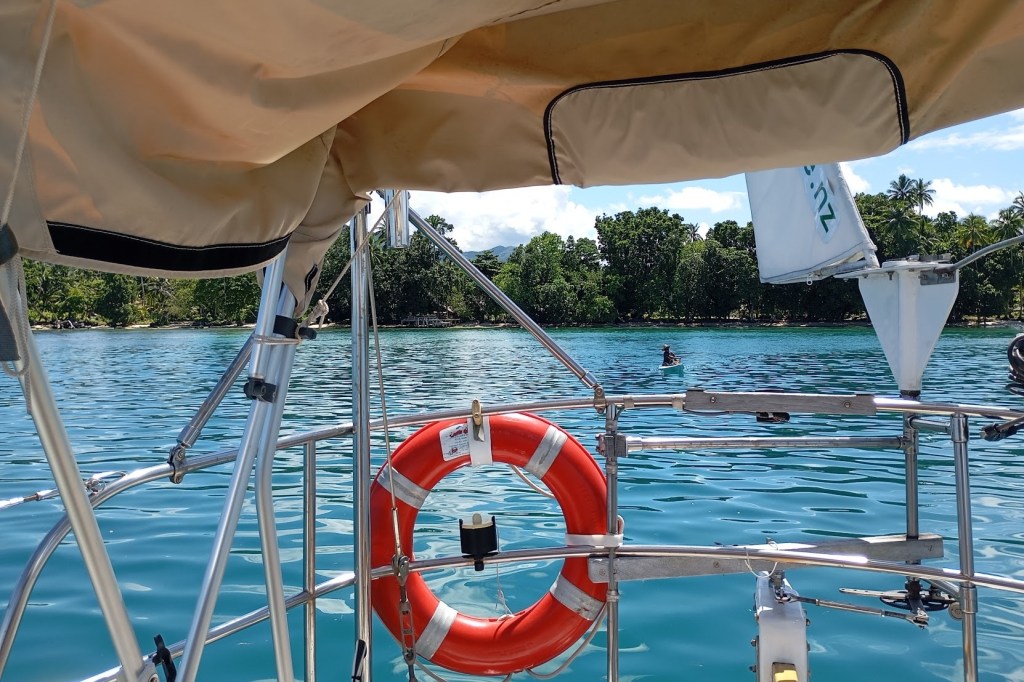
My plan was to stop at Kirakira where I had been told I could get some cash money at the National Bank of South Pacific (NBP) who have a branch there. The Solomons is very much a cash society and getting hold of cash can be difficult and time consuming
It was pancake calm as we departed from Conflict Bay and left Guadalcanal island astern. Once clear of the island we sailed steadily in a light NE breeze. We made it almost all the way to the top of San Cristobal island, some forty miles distant before having to resort to engine power for the last few miles. Late afternoon, as the sun was calling for drinks we anchored in Marou Bay, The anchorage had some current and we rolled gently in the low swell overnight.
The next morning there was no wind, we motored down to Uki Island and anchored for the night. Uki Island was a quiet place, a few canoes came out to trade fruit and veggies. Next day, calm again, another motoring day. As much as I dislike it on days like this the only option is to use the motor if progress is to be made. We arrived and anchored at Kirakira mid morning. I didn’t like the anchorage much, swell was coming into the bay with a lee shore. I launched the dinghy and was straight ashore, intending to do all my business that day and depart the following morning.
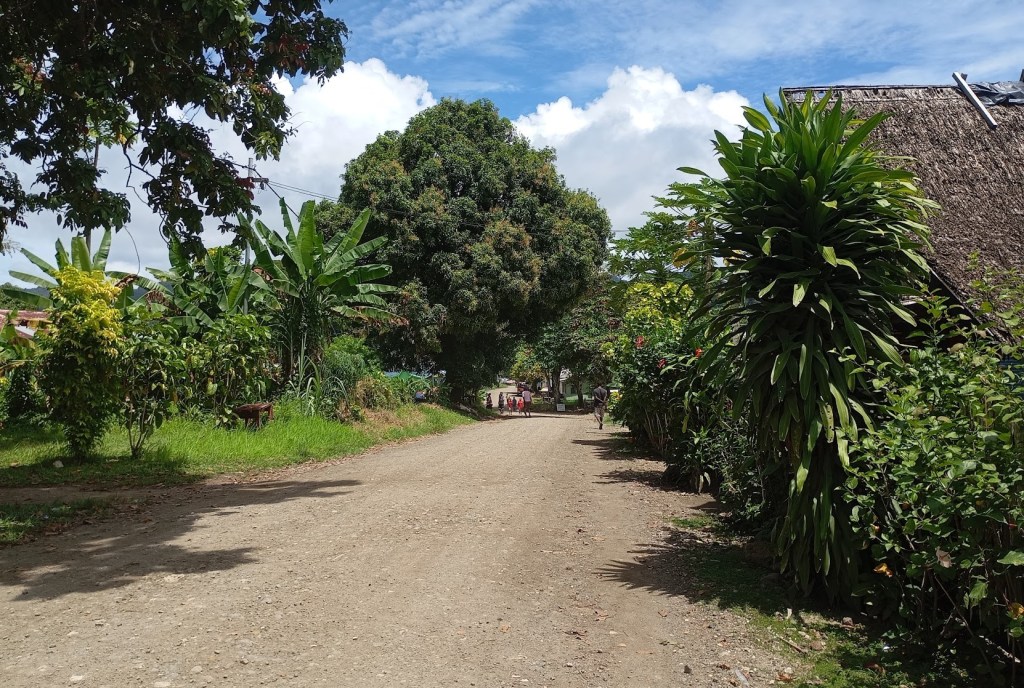
Landing ashore was a bit challenging in the surf on a steep shingle beach. As luck would have it, I timed it to perfection and skipped ashore, hardly getting my feet wet.

The town is very relaxed, with greenery and flowers everywhere. My first disappointment was at the bank. They could not process my credit card. No cash. They advised I try he agent who ran a shop, off I went and eventually found the agent. She was most helpful but still no luck, her terminal was not working. Oh well, such is life, you cant always get what you want.

I noticed I was being followed so stopped to see what was going on. The gentlemen approached me and introduced himself, he was a policemen. Would I like to come to the station for a chat? I had nothing else to do and this seemed interesting so I tagged along. It transpired that the novelty of a non local white man wandering around has aroused their curiosity – that was all. We had a good chat. I was happy to take my time as the room was air conditioned and it was hot outside. Soon I was on my way again and did a bit of shopping with the last of my cash at a local store before returning to the boat.
The next morning I had the anchor up at first light and we were on our way to Star Harbour. This was quite a long day run, almost forty miles, the wind was light and we mostly motor sailed, arriving late afternoon at the anchorage. Star harbour is the sort of place you take an instant liking to. It’s a wonderful enclosed natural harbour, not too deep and a nice muddy bottom. You could ride out a cyclone here with the boat anchored and lashed into the mangroves.
Here I traded for fresh fruit and vegetables, really nice, fresh from the gardens. There was also fresh crayfish on very reasonable terms. I was eating well and all good natural foods.

Ashore I met the locals who were all very friendly and welcoming. The local children showed me around and took me on walks. We stopped at the small shop where I was able to spend the last of my Solomons money, loose change, on lollies for my helpers.

I met the school master, an elderly Kiwi gentleman, we had some interesting conversation. It always interests me the people you bump into in out of the way places.
The village of Namuga at Star Harbour is famous for a visit by the Queen (Queen Elizabeth II) in 1974. The Royal yacht Britannia anchored off and the Queen and Prince Phillip came ashore by launch. What a sight that must have been for the locals. There is a platform where the queen was received and next to it a plinth where a plaque was placed to celebrate the visit. The plaque has disappeared.

I met an old lady who remembers the visit, she said it was a wonderful day, people came from miles around to attend and see the Queen. Amazing how word got around .
When I was an apprentice, I had the pleasure of being on a ship that was supporting the Royal Yacht on a visit to the Mediterranean. I was impressed when the Royal Yacht anchored, the sailors painted the anchor chain white from the hawse pipe to the water, it looked very smart.
One particular night stands out in my memory. We were in the Aegean Sea at night, the royal yacht was steaming alongside, we were doing a fuel replenishment at sea at about ten knots. The sea was flat calm, the stars were out and the Royal Marine Band were playing Jazz on the upper deck. It all looked and sounded perfect. It is a magical memory.
There is a cell tower serving the village of Namuga. It is powered by solar energy and usually by early afternoon switches on to provide a phone signal and data. Its not too reliable as there are no back up batteries and if a cloud passes over the signal disappears.

My next destination is Lata around two hundred miles to the East. I will be clearing out from Lata, departing the Solomons and heading down to Vanuatu.

 The Adventures of Captain Ray Penson